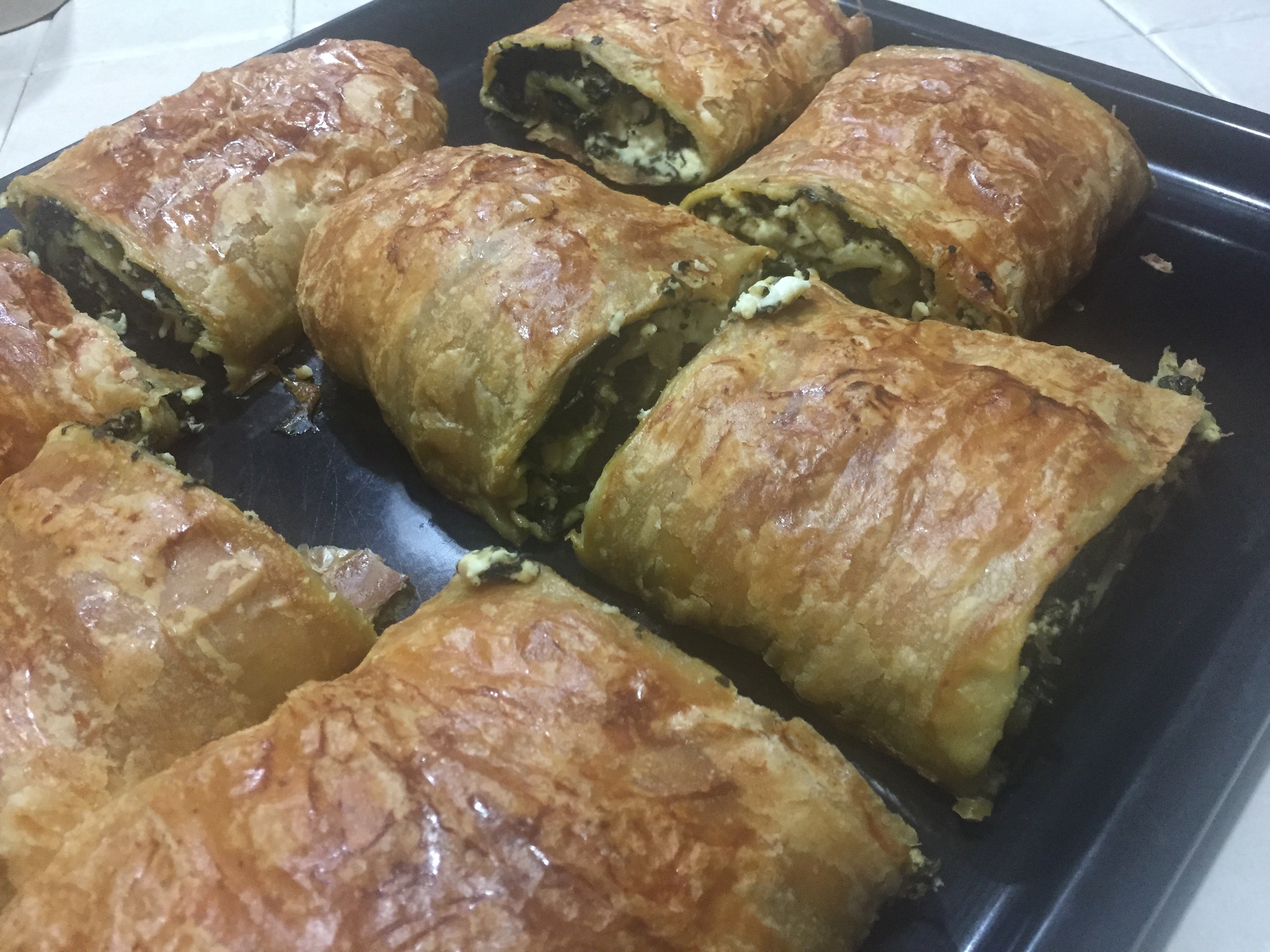
Pie’s is not something that usually associate with the Greek cuisine but rather I would say with the English one. That is rather unfortunate as the Greeks have a lot of love for there traditional pies like the British. If you travel to Greece there is no way you can miss them and especially the traditional Greek Spinach pie that is cooked everywhere in the country.
Category: Traditional
-
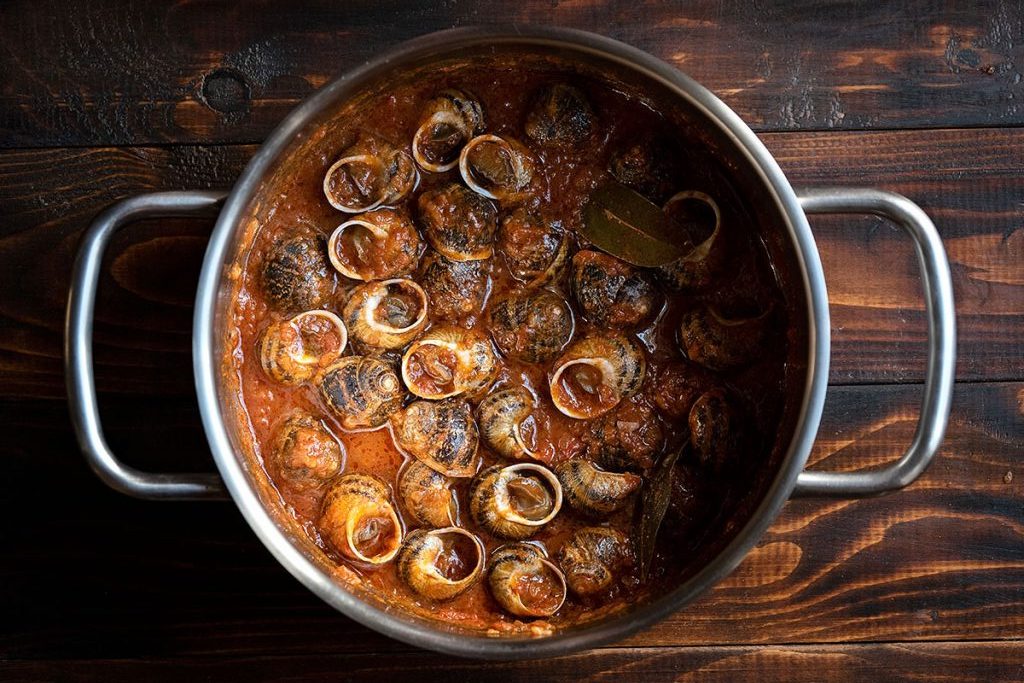
Traditional Escargots Recipe with Red sauce
The following escargots recipe is considered a delicacy in Greece and really famous especially in Crete. Escargots in red sauce is something that you even going to love or hate…but apparently i am in the first category.
Land snails are regularly consumed in Europe and you can find them as a starter or main dish in France, Italy and Spain as far as i am aware of. In France they are called “escargot” and they served on there own shell prepared with garlic and parsley butter.
On the other hand in Italy and Greece it is common to cook them with a variety of sauces.
While in Greece there are a variety of different recipes in regards to that dish, one of the most famous ones exist in Crete where they dish is called “Μπουρμπουριστοί Χοχλιοί” but please…don’t ask me to translated. I wouldn’t know…
Anyway, going on with our escargots recipe we would prepare them with the same exact way we did in my house in Greece. This was one of my favourite dishes of my father and he has given me that recipe a long time ago when i visited my parents in Greece.
I worked hard to translate the recipe word by word…as much as i could.. 🙂
Ingredients for Escargots recipe in Red Sauce
- 1.5-2 kilos of snails
- 3-4 kilos of onions
- 1 can of tomato juice
- 1 spoon of tomato paste
- 2 bay leaves
- salt, pepper
- 1 cinnamon stick

The snails are on our table! How to cook Escargots in Red Sauce (extra tips if you are based in London, UK)
After a really rainy day we go to our garden and we gather some snails, approximately 1-2 kilos. (Most probably you wouldn’t wait much for a rainy day in London)
Alternatively, if you don’t have a garden, you can go to a park, or the famous English country side. If the two options are difficult you can go and buy from a shop that sell Cretan products.
In the case that you don’t have such a shop then you can look up to some of the Turkish ones that are around in London.
If after all these you still can’t find snails then you can do something else, cause you are not having that snails recipe today.
- Let’s say that we got around of 1.5-2 kilos of those screw worms crustaceans, we put them in a small pot with a cap and we sprinkle them with little water and flour so they can get out of there shell and they start to eat.
- We close the lid we secure it. If you don’t do that the can open it up and they will see them all around your kitchen.
- Once or twice a day we open the lid ( you’ll see that most are gathered around the lid ) pour everything into the pot, put enough water to cover the snails and stir relatively quickly for a while in order to clean and make them clean there shawls . After that we strain, sprinkle again with little flour and reseal.(no need to sprinkle again with water because it is already damp )
- This is repeated for at least three (3) days and always up to see them poop.
(yes poop, it is something subtle like threads that is pooping ) from black to become white . This means that the digestive system is clean of dirt that they normally eat. Also, you will see that the many agitations are gone as also the drool (foam ) .

We need to be careful as snails will…run away!
- Either way don’t expect that this will be perfect because this is how there body works and most probably they would be tasteless without any shawls.
- The shell meanwhile, must be by now completely clean after so many washings.
- Finally we reach the climax of the drama .After having cleanse the intestines, their shell and their shawls , it’s time to put enough water in a pot and bring it to boil. When the water is boiled, we add the snails and let them boil for 5 minutes. (the cruel and painful death of snails ) .
- After we boil them we drain them and with just a knife (preferably sawtooth) cut the top of the shell being careful not to cut your fingers . This is to tuck the tastiness in the back but in addition to that when you suck them they go right up your esophagus.
- Meanwhile prepare the sauce. In a pot put a good portion of olive oil, and cut in big portions some onions. ( twice the weight of the snail 1 to 2) Start to sizzle them but be careful not to over do it.
- Pour a can of tomatoes juice ( 450g.) and a tablespoon of tomato paste ,2 bay leaves , spices, salt and plenty pepper , cinnamon and a spill a vegetable cube. The spices always depend on the persons taste. Of course add some water if necessary.
- When our sauce is boiled then we add inside our snails and we let them boil together for some minutes. Our food then is ready! Just make sure you have enough juice in the sauce as this food needs a lot of bread also to go along the sauce!

Escargots recipe with Red Sauce
Good luck and bone appetite .
-
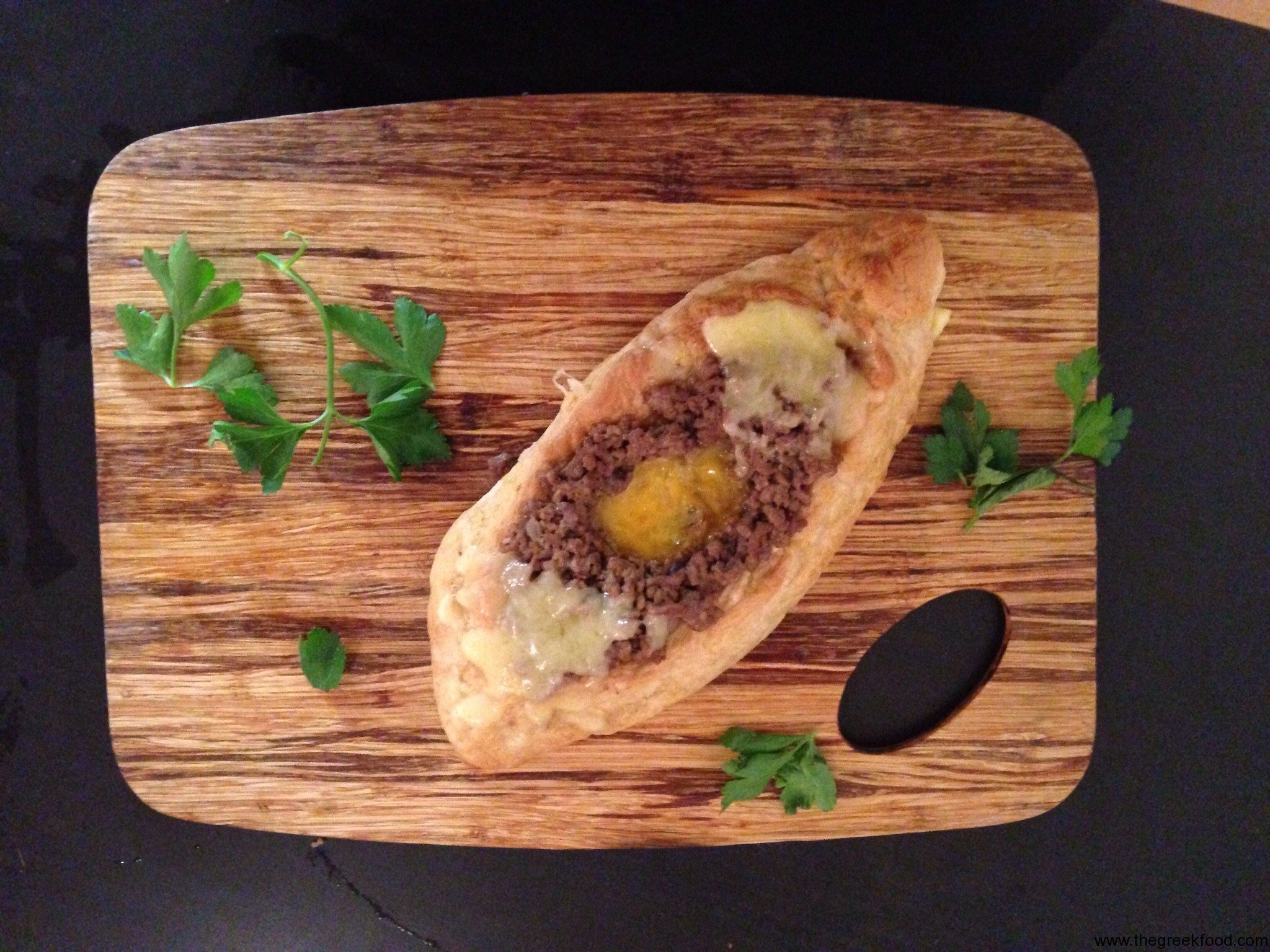
How to make peinirli recipe
The following dish is something that i was craving for a lot of time. Making a peinirli is not easy but it is something special.
I remember when i was young my father used to bring ready dough from a local baker and we did the filling by ourselves. It was one of the highlights of our weekend at that time as it is a really filling dish.
Again looking some of the history of the dish i have to say that it is something that it it used in Middle East a lot, obviously with some variations. One of the characteristics of this food is the way that the dough is being made and shaped to have a shape of a small boat or canoe as i like to say.
The filling can be anything you like to be honest. Usually ham and cheese will do but the classic is minced meat with egg!
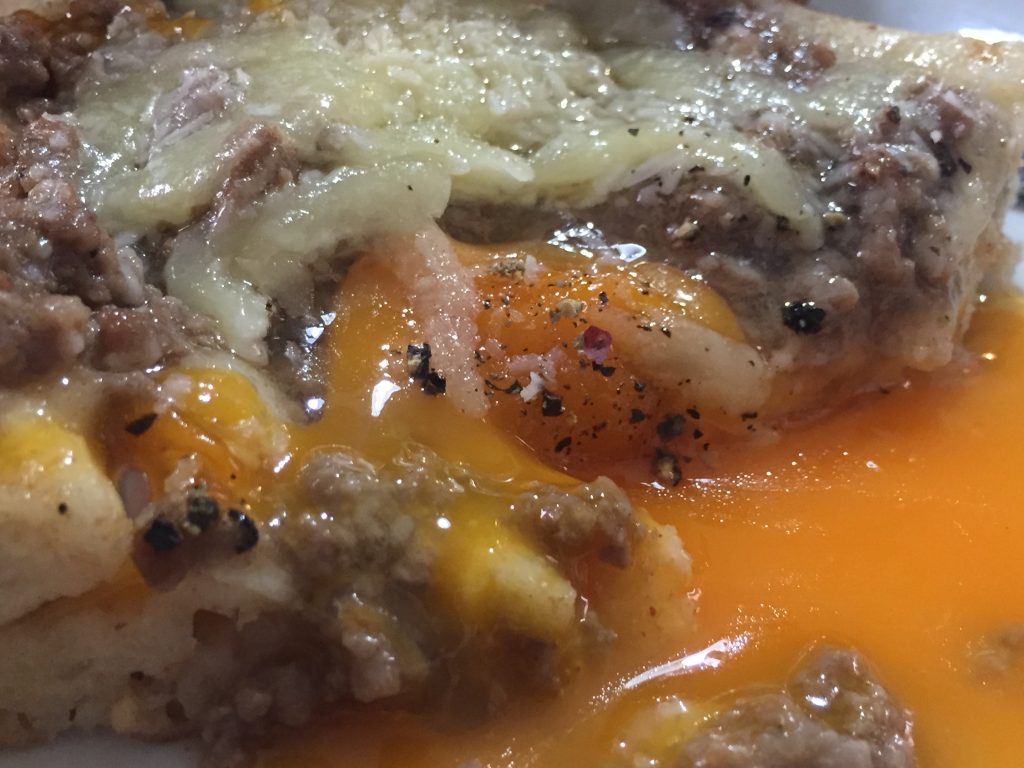
The melting egg mixed with the minced meat on the peinirli. Hell! PEINIRLI INGREDIENTS
- Around 0.7 kilos of flour
- 10-14gr of years
- 5 tea spoon of salt
- 1 tea spoon of sugar
- 1 tea spoon of baking powder
- Around 2-3 pints of warm (not boiling) water
For the filling..
- 1/2 kilo of minced beef
- 1 big onion chopped
- 1 vegetable cube
- Salt and pepper
- one egg for each peinirli you are making
HOW TO COOK PEINIRLI
The difficult thing is to make the dough i guess. As it was my first time it was kind of difficult i have to say. But i was surprised on how well it ended up. So… You need to put all the ingredients in a bowl and start kneading them with your hands. The secret -as i have learned – is to add the water slowly while you do it until the dough slowly starts to remove from your hand rather than keep sticking to it.
Rather difficult i know but it is something i guess you learn after some time of training.
When you see that it starts to become “heavy” in your hands and a unit rather than dissolving, its time to leave it to “grow”. So cover the bowl with a towel and let it for around 15-30 minutes. If everything goes well then you will notice after some minutes that the dough has grown almost twice its size. Magic huh?

Just came out of the oven Now depending on how many peinirli you want to make then its time to divide the dough into bowls and start shaping them. Ideally you need to put them in a board and spread them, first make the sides and then make sure that you “pinch” them in the top sides so they cannot open.
Again put them into the oven as it is close and let them there for 15 minutes so the dough grows again. When it is done, get them out and spread some butter all over them and then put them back in the oven in medium heat no more than 15-20 minutes. Just enough so they can be baked and maybe become a bit of brown on the edges.
As you are doing that or after you need to prepare the fillings. So in a big pot add the minced meat together with the onions and a bit of olive oil.let it sizzle and then add some water. Not to much to cover it but just enough so it can easily boil until the water evaporates. Make sure that the meat is left without water afterwards, just with the oil.
When its ready then you need to add it in the middle of each peinirli. In order that the egg remains in the middle of the peinirli we create a small hole with our hands where we place the egg.
Put them back in the oven for 15 more minutes and they are ready.
Just came out of the oven If you feel like it you can even put some cheese on top! Enjoy!
-

Traditional “Kokoretsi” recipe from Greece
Well, if you are Greek and reading this blog, you will know that the following recipe for kokoretsi is one of the most famous in the country during Easter and something that you dont easily do, unless for a celebration.
Nevertheless, it is something that you can find in some Greek taverns during the year and i think deserves its place in every greek food blog!
Some people prefer it as a starter, some others as a main meal, it doesn’t make a difference to me…it still tastes the same 🙂 In Greece where i was this year for Easter was our main dish along side our lamb. Traditional it is cooked the first day of Easter and after Greeks orthodox, have come from the church the previous day and tried magiritsa, the traditional easter soup.
One of the main reasons you will not find it in any other country of the European union is because the main ingredients are the internal organs of the lamb, heart, liver, lungs and kidneys wrapped in seasoned offals.

Sliced and Ready As offal’s (in Greek: Sikotaria) are not allowed in the countries of EU (at least in the UK as far as i know) your only chance is to visit Greece , Turkey or some of the Balkan countries. I am not a doctor to judge whether it is safe or not….but my grandfather was eating that almost every year for the past 91 years of his life and i think he had also one again this year, so it cant be so bad!
The basic idea is that you put in a long skewer all the organs one after the other and you cover them with offals.
The offals “protect” them from the heat in a way as the organs inside are cooked on there own liquids. When the offals become brown and cooked then it is ready.
I am not sure in how many countries can you really cook it as finding the ingredients can be really difficult but if you do find the chance to spend some days in Greece or Turkey be sure to try it…. Many people thought it was disgusting in the beginning but many people loved it in the end…
INGREDIENTS FOR KOKORETSI
- 4 kilos of lamb internal organs, including liver, heart, lungs and kidneys
- 5 kilos of Offals to wrap it
HOW TO MAKE KOKORETSI
- We are washing really well all the meat and intestines that we are going to use for the inside part of kokoretsi while in the same time we cut the pieces in small-medium size pieces. More or less the size of an egg.
- Washing the intestines is the most difficult and tiring part of the process.
- After we wash them all really good we turn them, inside out in order to clean also the internal ones. There are many ways to do that but the most usual is the method of the needle. Simple, you take a needle, tie it up one place and then push it on the inside of the intestine until it comes up from the other side.
- If you don’t start the preparation in the same day, the clean intestines should be kept in a pot with water and vinegar.
- In another pot, you add the pieces of meat (sikotaria) and you start the seasoning.
- Hit in a blender 3-4 cloves of garlic with 1 spoon of olive oil.
- Add Salt in the sikotaria and oregano but not too much.
- Now add the garlic and stir so all the ingredients go everywhere.
Let it relax for an hour or so. . - Now its time to pass everything in the spit or the “beloniasma” as it called in Greek. You need to add in turns, hearts, liver, bolia and additional intestines you might have making sure that they are really close one another without being in the same time really tight.
- When you do that then you need to cover all the parts with the intestines. So you get the point, the hearts,liver etc will be inside protected from the fire and the intestines will cover them on the outside.
- What you wan to do is take one long intestine and tie it up on the bottom side of the spit and slowly pass it round the spit until the upper side where we will have to tie them up again.
- We repeat the same procedure going up and down making sure that we cover as much as possible all sides.
- As we go on we will notice that some pieces of meat will be poping out of the intestines. We need to make every effort to cover them too.
- When we finish with it we need to leave it standing for at least 2-3 hours in order that any liquds are removed from the meat. I remember my father and my grandfather leaving it in the previous night but it depends if you have time to do it.
- You need to have prepared a proper fire to cook it and that is really important as from that the amount of time for the cooking Depending on the size of kokoretsi and the fire you are looking at around 2.5 -3.5 hours.
- You need to place it really far away from the fire in your barbeque so it can be cooked slowly and internally. You place it lower and closer to the fire only during the end so you can have the crunchy feeling on the outside.
-

The best Magiritsa Easter Soup
The following dish was one of my favorites during my childhood, and to be honest it is still one of my best dishes, the famous Magiritsa soup. I try to cook it almost every Easter now that I live in the UK and it was one the first dish that I ever made and managed to surprise my friends as they thought it was too difficult to make.
It’s not difficult to prepare Magiritsa soup but it is quite time consuming I have to admit. During Christian orthodox Easter, Christians need to fast at least 7 days before Great Saturday when according to religion Jesus Christ was resurrected from the dead.
So every time me and my family were fasting for one week without eating meat and anything related to that and were going to the church on Saturday to celebrate Jesus Christ resurrection. After that, the first food that we eat is the so called, –magiritsa.
Obviously, there are many more options in the table and we should mention the traditional red eggs as well as the greek tsoureki bread.
Magiritsa is a soup that has different kind of meats inside combined with rice. It’s pretty straight forward to make but requires a lot of preparation. As I am in London for almost 8 years, I have had the opportunity to make magiritsa a few times as some of my Easter holidays were spend here. So I will give you my version of the soup as I am doing it here.

Our Magiritsa is ready for Easter Saturday! Just an important note however before we get going. The dish in some of its versions in Greece, has beef or lamb intestines. Nevertheless, that is something really hard to find over here so I do not use them on this instance. Either way it is an important part of Magiritsa when this is cooked in Greece.
The main part of the soup is called “sykotaria” which consist mainly the lamb offal. Different people add as many as they can find or simply like. So here is the recipe for magiritsa while in the same time you can see one the first blogs i did last year for cooking roasted lamb, another typical Easter dish.
MAGIRITSA EASTER SOUP INGREDIENTS
- 500gr liver lamb
- 250gr liver beef (Not necessary but I add also for extra taste)
- 250gr lamb diced
- 1 lamb heart (Not necessary)
- 1 cup of red wine
- 3-4 lettuces depending on the size
- ½ kilo of onions
- 1 big bunch of fresh dill
- 1 tea spoon of Olive Oil
- Salt/Pepper
- 1 cube of vegetables
- 1 tea cup of rice
- For the Egg-lemon sauce
- 2 eggs
- Lemon juice from 11/2 lemons
So, ideally we need a big pot to boil all that stuff- get the biggest ones you can find.
HOW YOU COOK MAGIRITSA
- Add the tea spoon of oil and increase the heat. Add all of the different parts of meat you have and stir it well until most of it (if not all) becomes brownish.
- Continue stirring by adding the chopped onions
- Add the cup of red wine and let it for another 2-3 minutes. Smell the wine as it evaporates.
- Add enough water to cover all of the meat and at least 2 cm more.
- Continue by adding the chopped lettuce and stir it until it gets soft and mixes with the meat.
- Continue with the cube of vegetables and add salt and pepper as much as you like. Bring it to a boil for at least 45 minutes. Taste regularly the meat and add water if you feel its necessary. Remember it’s a soup!
- After 45 minutes add the fresh dill and the cup of rice and continue boiling it in a more medium heat until the rice is ready
Just before you serve them you should add the egg lemon sauce called in Greek “avgolemono” (egg-lemon)
Take a spoon of hot soup and begin to slowly add to the pot with the mixed eggs with the lemon juice. Slowly though. Repeat and add another spoon of hot soup. Slowly.
Stir this mixture a bit (shake the pan round with your hand) to be mixed and then begin to slowly pour in the pot where you have your Magiritsa while stirring the soup with a spoon.
Enjoy!