Search results for: “yogurt”

  • The Mediterranean Diet – Looking at Some Facts

    The Mediterranean Diet – Looking at Some Facts

    The Mediterranean Diet is actually much more of a way of life than it is a diet, even though the name may suggest otherwise. The emphasis is not on weight loss, rather on keeping healthy.

    Background

    Although it was originally inspired by eating patterns in the 1940s and 1950s in southern Europe, it only rose to prominence in the 1990s. Much more so than previously, the last few decades have seen an increased interest in dietary and lifestyle issues, mainly because obesity and cardiovascular problems have become bigger issues. But the diet is more than a health check. It has been a way of life around the Mediterranean Sea, where meal times are often seen as an opportunity to strengthen existing family ties or even forge new friendships – in short: mealtime is the perfect time to socialise, whether it’s with family and friends, members of one’s community, or even with strangers.

    In certain areas more bread and pasta are consumed than in other parts, such as Italy, and therefore the diet can be high in carbohydrates, which, if you want to lose weight, may not be so easy. Unless, of course, you lead a fairly active lifestyle which includes exercise.

    What exactly is the Mediterranean Diet?

    This is a diet found in the countries – as the name suggests – around the Mediterranean. Even UNESCO, in 2010, included the diet in its Intangible Cultural Heritage of Humanity list for the following countries: Croatia, Greece, Crete, Italy, Morocco, Spain and Portugal. People who have studied this diet and its benefits will tell you it is more about – in a way – who you are, than following strict rules and weighing calories. It is also interesting to note that the diet may vary from country to country – even from region to region in the same country – depending on the produce that is grown in a specific area, or in some cases because of ethnic differences or economic diversity.

    The Main Ingredients

    • Typical foods consumed by those following this diet include the following: fruit, a variety of vegetables, legumes such as beans and peas, nuts, unrefined cereals (mostly whole grains) some steamed fish and other seafood, limited chicken and wine. Some dairy (mainly cheese and yogurt) and eggs are consumed – and very little red meat and sweets.
    • One aspect of the diet that stands out is the high consumption of olive oil – preferably extra virgin – that contains plenty monounsaturated fatty acids (as opposed to butter which contains saturated animal fats). You will find that oil is dribbled over almost every salad, which normally contains green leaves and tomatoes among the ingredients. Most often it is used as an alternative to butter and margarine. Olive oil is also used for cooking and baking a variety of dishes in certain regions, as opposed to butter and lard; the latter, for instance, is often used to cook with in Northern Italy. Avocado oil is another source of good plant oil.
    • Lots of water is recommended. So is red wine in moderation – try not to have more than a glass per day though. Coffee is allowed, and so is tea. But stay away from sweeteners and fruit juices which are high in sugar, unless of course you squeeze and drink your orange juice fresh, with nothing added.

    It is worth mentioning, too, which foods should best be avoided: any added sugar such as those found in soda drinks, ice cream and table sugar, refined grains, refined oils and processed foods.

    Following the Mediterranean Diet

    The easiest way to ‘train’ oneself in terms of the diet is to see it as a healthy daily routine and not to think of it as a diet as such. Besides, you certainly don’t have any reason to go hungry as you would on most other diets. Also, if you smoke, give up – and set aside enough time to exercise.

    If you accept that vegetables, fruit, whole grains and fish make up the bulk of your daily food allowance, you certainly are ‘there’. Individuals will always have different appetites, so each one decides how much he or she eats.

    Make sure you include the main groups every day – as listed below – and avoid those which are better to cut out.

    • Popular vegetables include, typically, carrots, spinach, cauliflower, broccoli, tomatoes, onions and cucumber.
    • Fruit most often included in the diet are oranges, apples, pears, grapes, peaches, melons, figs and strawberries.
    • Nuts in the diet include hazelnuts, cashews, almonds, seeds such as pumpkin and sunflower.
    • Whole grains that one should try and include are whole oats, barley, brown rice, rye, whole wheat and pasta. For those who are a bit more weight conscious, try and limit the bread and pasta.

    Never punish yourself. Have a steak or something sweet from time to time, but regard it as a treat. Then enjoy it! Even at restaurants there is no reason to feel you can’t enjoy a meal. Stick to fish and salads. Ask the chef to fry your food in virgin olive oil and stay away from refined grains – eat whole grain bread. Instead of butter, dribble olive oil over it.

    Health Benefits

    Studies suggest that people who follow a diet rich in vegetables, nuts and oils are a third less likely to die early, as opposed to those who consume red meat and butter, for instance. This makes the Mediterranean Diet a better option than those typically favoured in the UK and US – in fact most western countries with their emphasis on foods high in animal fats and sugars. It is claimed that obesity and type 2 diabetes, high blood pressure, heart disease and even Alzheimer’s can be much better controlled by an eating pattern such as the Mediterranean Diet.  There also seems to be good news for the over 50’s with reports that aging brainpower may be boosted by following the diet.

    In the Spotlight

    It has emerged that there seems to be a definite change in Mediterranean eating patterns in recent years, away from the previously healthy ones which made the headlines. It seems that mass tourism may partly be to blame. Visitors on holiday from the UK and the US, specifically, are known for their preference for fast food, red meat and refined flours. Also, the typical ‘Western’ diet allows for the consumption of fast foods much more than a traditional diet, such as the Mediterranean. It stands to reason that Europe’s touristy Mediterranean would change its eating habits to please the visitors who contribute billions to the economy of these parts every year.

    This trend has also shown increased levels of obesity among even teenagers. The associated danger of diabetes and heart disease because the younger generation today eats less fruit and vegetables, but much more deep fried food and sweets, is worrying. Further, life is different: As times are changing people in these parts have become less physically active since their livelihood no longer necessarily depends on working the fields and going out to sea for a full day’s work.

    Figures indicate that in Greece, where seven in ten adults are now considered overweight or obese, the diet has decreased by up to 70% in recent times, according to Luis Serra-Majem, head of the International Foundation of Mediterranean Diet and by almost 50% in Spain.

    Now, it seems, ways must be found to reintroduce this diet that seems to have so many benefits, from physical health to aspects of socialising.



  • My Top 10 Greek Foods to try

    My Top 10 Greek Foods to try

    Oh Greece, lovely Greece! The sun! The historic monuments!  The beautiful sandy beaches! …and obviously the famously tasty food!  I guess there are so many things you can see and do in Greece if you ever go over there.  As in any trip you do in any country the biggest problem you will encounter is that you don’t have enough time to see or do all the thing that you want!

    Don’t worry! That’s why we are here!

    The following are some of my personal favorite dishes that I will urge you to try if you ever go to Greece. Obviously there are many more available and special favorites depending the place you are but for this case we will only focus on some of them.


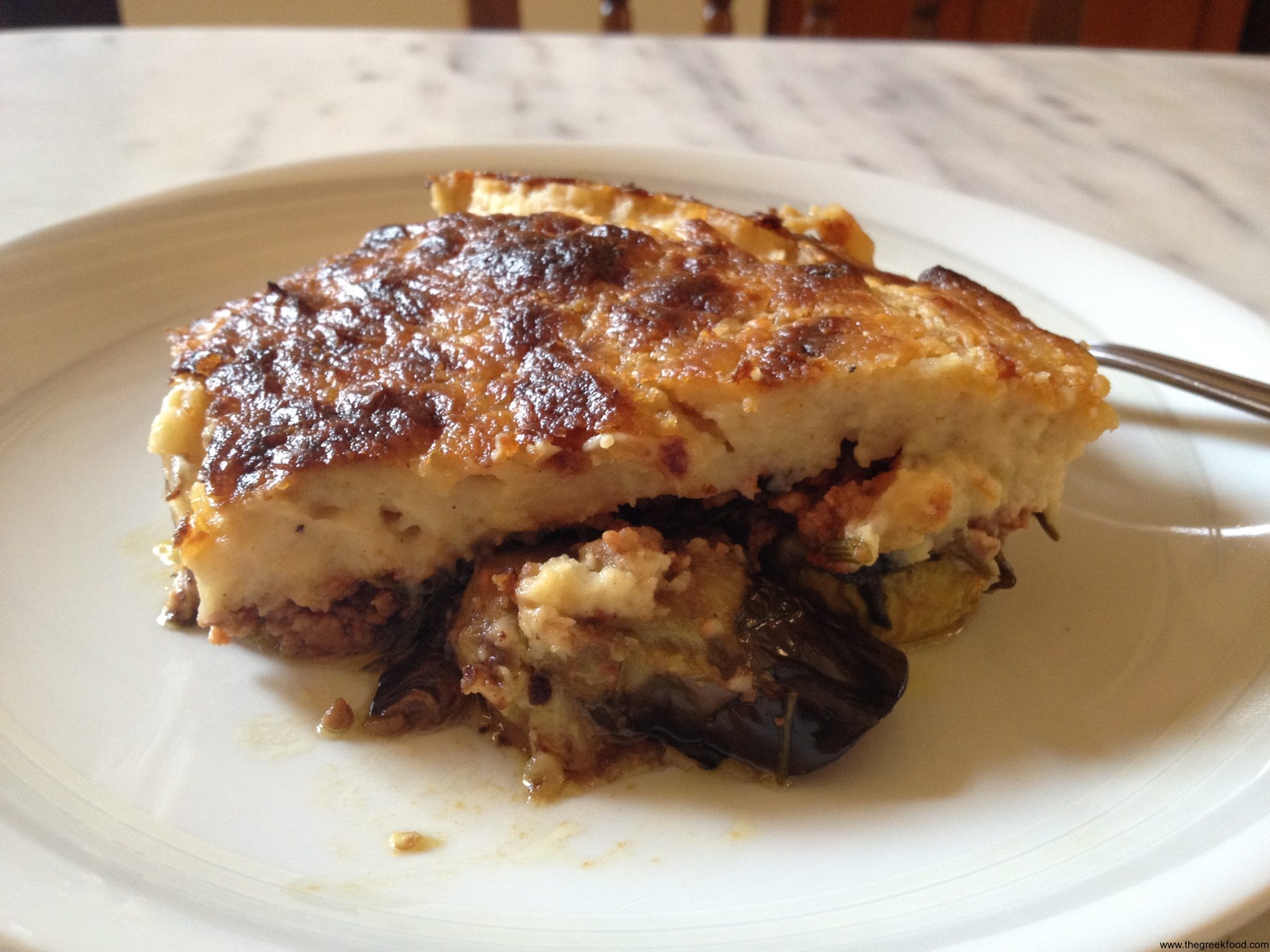
    greek moussaka

    • Moussaka

    You cannot start a discussion about Greek Food and the Greek kitchen without mentioning  Moussaka, arguable the most famous of all the Greek dishes. Variations of the same dish can be found all around the Balkans, Turkey and furthermore to the east. However, the Greek version is one of the most famous ones and is based on layering: sautéed aubergine, minced meat fried pureed tomato, onion, garlic and spices like cinnamon and allspice, a bit of potato, and then a final fluffy topping of cheese and béchamel sauce.

    Greens-horta
    Greens Boiled
    • Vrasta Horta –  Boiled Greens

    Well, that is something you certainly cant find in many places. I always remember my grandparents going out during summer out in the fields and trying to find the best leafy greens to boil. There are so many different types that I don’t even know. Packed with nutrients and flavor, these greens will compliment any meal. Serve with a drizzle of olive oil and a squeeze of fresh lemon juice and enjoy. Many times I remember my father asking for boiled greens as a salad to eat together with his fresh fish.

    galaktompoureko
    galaktompoureko
    • Galaktompoureko – Custard Phyllo Pie

    If anyone manages to pronounce it properly I promise I will make one for him! Either way, its not important to learn how to pronounce but to find it and try it while you are in Greece. One of the best deserts you can have and obviously my personal favorite. If you manage and find a proper patisserie in Greece (and there are plenty) go and ask for one.  It’s a divine combination of creamy custard and flaky phyllo dough that is baked to golden perfection then drenched with a lemon and orange infused syrup.

    The Lazy Spinach Pie
    The Lazy Spinach Pie. This one is with out a phyllo sheet
    • Spanakopita – Spinach Pie

    Greek and English have one thing in common. They both like pies!  If you spend some time in Greece and especially wonder around in some of the villages in the North you will definitely find a lot of variations.  Spinach pie is one of those classic popular pies that you can find anywhere, flaky phyllo sheets layered with a savory spinach and feta cheese filling.  You can never go wrong with that!

    Greek Souvlakia
    The all too traditional Greek Souvlakia
    • Souvlaki – Pita Sandwich

    The most famous fast food of the country.  You can never go wrong with this one. Mentioned it thousand times on my blog and I am sure any other food blogger in the world has done it also. Small pieces of meat grilled on a skewer served on a pita bread with a variation of garnishes and sauces. Best thing you can have after a night out with value for money.  Ideally its served with pork but nowadays in Greece you can find with so many different variations you cannot imagine.

    sea-bass

    • Fish – Just any kind of them

    Honestly, in a country with so many islands and one of the biggest coastlines you can find around the world, you can never go wrong. Make sure that you find a nice recommended fish tavern and ask about the catch of the day. Usually when I go in Greece during summer I am dying to eat octopus either grilled or boiled. Then again eating grilled shrimps is not too bad either….or Sea Breams….or lobster pasta…or fresh Swordfish…  or… or..or….

    Stuffed tomatoes and peppers gemista

    • Gemista – Stuffed Vegetables

    Again, I could not have such a list without having one of my favorites dishes listed. Basically as it is made during the summer as it is the best season for most of the vegetables.  You a create a heathen stuffing from rice and minced meat together with some seasoning and you stuff the vegetable with them. Let them cook in the oven and you have a dish for kings! Now we Greeks like to fight for anything so you will see many of them cooking them without minced meat as they believe that is the original recipe, which is equally good. Nevertheless, for me the ideal one would be with the minced meat added to them!

    patsas greek soup
    Our Patsa soup is ready with the addition of a bit of lemon


    • Patsas – Pork Soup

    Ok, in order to appreciate the following dish properly you will need to do the following things.

    • Go and enjoy the nightlife in Greece. Party until 6 o clock in the morning
    • Find one of the restaurants called “patsatsidika” serving that soup and try it around 6 o clock in the morning after a hard night out

    Pork soup seasoned with red wine vinegar and garlic, or thickened with avgolemono. Patsas has the reputation of remedying hang-over and aiding digestion, patsatzidika are often working overnight, serving people returning home after dinner or clubbing.

    tzatziki
    Traditional Greek dip tzatziki


    • Tzatziki – Garlic sauce

    There is not a chance if you spend some days in Greece to not try Tzatziki. That famous garlic and yogurt sauce is used as a started or as a basic ingredient in Souvlaki and is one of the most famous dishes you can have in Greece. To be honest if you go to Greece you can have a variations of sauces as a starter dip that are quite underrated and deserve a bit more of your attention.   Cool and creamy, this tangy cucumber dip flavored with garlic is perfect to compliment grilled meats and vegetables.

    giouvetsi
    Photo credit by mygreekdish.com
    • Giouvetsi – Beef with Orzo stew

    The following is one of the classic Sunday dishes that most of the Greek families have usually.  Traditional recipe that you can find in many taverns around Greece with beef and orzo mixing up with melted cheese. One of my best memories when i was young about this dish was that my mother used to cook us Giouvetsi in clay pots which added a lot more on the taste. Good old times!


    Obviously  could continue the list with more and more dishes that i love but we would never stop. 10 are kind of hard to find but i think i made an honest attempt.


  • Grilled Pork Souvlakia with oven potatoes

    Grilled Pork Souvlakia with oven potatoes

    Everyone knows by now how beloved is souvlakia in Greece and how often it is consumed everywhere. In Athens, in Thessaloniki, on the islands, on the small villages…it doesn’t matter. You will hear it sometimes with different names in Greece but always with same style.
    One Saturday morning after an excessive alcohol abuse on Friday night, I was so much wishing I could order some to my house like the ones they have in Greece. Didn’t want any pizza, or burger…just a good souvlakia dish. Well, there were some initial problems, first the hangover from last night’s rum and coca cola, and the fact I didn’t had any yogurt or pita bread to try and cook one with the more traditional recipe.

    It doesn’t matter; you still can make something nice…as long as you manage to control your hangover.

    INGREDIENTS FOR PORK SOUVLAKIA WITH OVEN POTATOES

    • 500gr of pork chopped in medium size cubes
    • 4-6 skewers’… or anything close to that you can find so you can stick the food, i had to improvise…
    • Around 10-15 cherry tomatoes
    • 2-3 large potatoes cut in different sizes
    • 2 onions chopped in large wedges
    • 2 green peppers chopped in large wedges again
    • Olive Oil
    • Salt and pepper
    • Oregano, much of oregano

    METHOD

    • Drink a large glass of water to relieve the pain from the headache and then take some painkillers Then we are going to start preparing the potatoes, I found a really nice way for good oven potatoes. Take a big pot and fill it with water, put the potatoes in, bring it to a boil and let them boil for 15 minutes until you see the potatoes are soft you can pinch them with a fork
    • When its done, remove the water and keep the potatoes (obviously..) . Add them in to a baking pan and sprinkle with salt and oregano, adding also olive oil so the potatoes are not stuck. Put them into the oven for 200c for 20-25 minutes until you see they start to become brown on the outside.
    • As the potatoes are being cooked you take the ingredients and start preparing the souvlakia. As a basic rule, start with a vegetable, and end with a vegetable. Don’t cut the cherry tomatoes in two, as it will remove the juices from them. Put lot of salt, pepper, oregano and oil on them before you start placing them on the skewers.
    • When you are finished, add them on the grill and cook them for 15 more minutes turning them every 4-5 minutes from each side. You can keep the potatoes underneath so to keep warm.


    Serve them with a bit of parsley if you want, and some sauce of your choice.

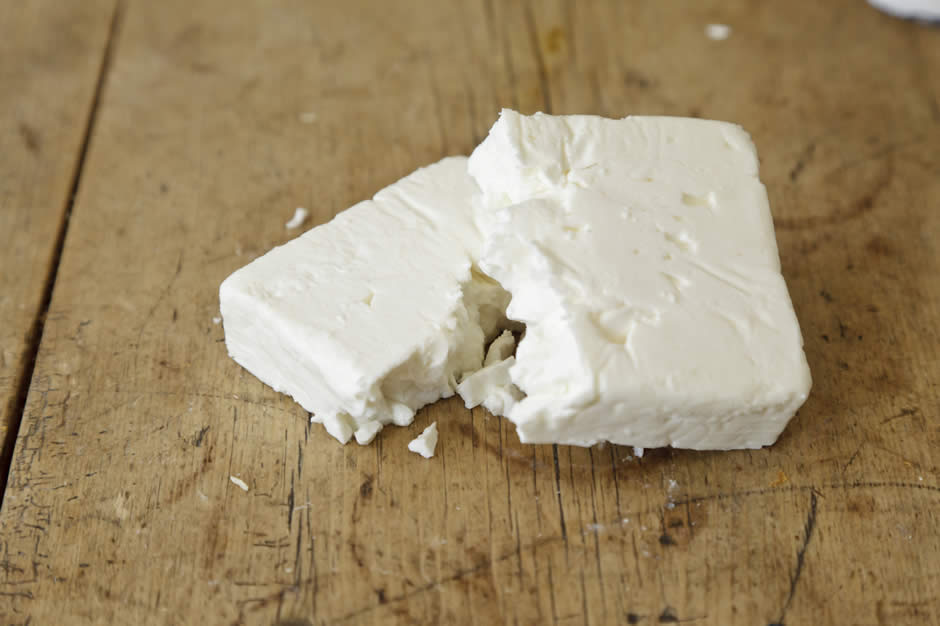
  • Feta Cheese

    Feta Cheese

    Anyone who has ever had a Greek salad or a gyro knows how important Feta cheese is in the assemblage of delicious Greek delicacies. The tangy flavor and salty complement that this cheese adds to so many dishes has increased its popularity in cuisine the world over in the past few decades, and it doesn’t seem to be stopping anytime soon.

    Today, we want to tell you a bit more about the history of this all-important item, its nutritional values, and some creative and wonderful ways to make use of it in your own kitchen.

    History, ingredients, and nutritional information

    Sometimes called the “Princess of Cheeses,” for over 200 years Feta has been recognized as one of the most delicious exports of Greece, and in 1996 the name was patented by Greece as protected. More than 16 years of legal battles throughout Europe followed, as Denmark, Germany, France, Italy, and other countries attempted to claim that Feta was not unique to Greece but similar to cheese produced elsewhere. In 2005 the EU Court Ruling established that Feta is an exclusive Greek product and other European cheeses would not be allowed to call similar products “Feta.”

    Feta has traditionally been made from sheep’s milk, or a combination of sheep and goat’s milk, for over 6,000 years. Although today many store brands use cow’s milk, you can use whatever kind of milk you choose if you decide to make it at home.

    Feta is made using milk, yogurt, table salt, and rennet. These simple ingredients make this cheese not only delicious, but comparatively low in fat with other cheeses (about 6g per 1 ounce). It is also high in protein (4g), low in calories (about 75), low in carbohydrates (1g) and low in cholesterol (25mg). Because it is a brined cheese, Feta does tend to have a slightly higher sodium content than some other cheeses, but adds so much flavor to dishes you may not need other seasonings.

    How to make your own Feta at home!

    Feta follows an uncomplicated recipe which requires no special tools or knowledge. To make it at home, you will need a large pot with lid, a long-bladed knife, handkerchiefs, a strainer, and a cheese mold in addition to the ingredients listed above. Follow these simple instructions, that I found for more details.

    1. Begin by warming the milk to 30 degrees Celsius (86 degrees Fahrenheit) in your large pot while stirring regularly so it does not burn.
    2. Remove the warm milk from heat, mix together equal parts yogurt and cool milk and add to the warmed milk. Stir thoroughly, cover, and let sit for one hour at room temperature. Meanwhile, dissolve the rennet in cool water.
    3. After an hour, add the rennet to the milk mixture and stir thoroughly. Cover, and let sit overnight at room temperature. The mixture should gel and some of the whey may separate.
    4. Cut the curds into approximately ½ inch cubed pieces. With a clean hand and arm, reach to the bottom of the pot and lift the curds to stir them. Occasionally stir the cut curds while they sit for 10-15 minutes.
    5. Filter out the whey using the strainer lined with a handkerchief and save it to make brine. It may take 2-4 hours to drain all the whey, which can be done at room temperature or in the refrigerator.
    6. Mix salt into the drained curds and break them up sufficiently. Mould the cheese and let it sit overnight.
    7. Make brine from salt and whey. Cut the cheese into 1.5 inch cubes and place into a jar, pouring the brine over them. Store in the refrigerator and rinse excess salt before serving.

    Endless possibilities for dinner using Feta

    You may be familiar with the most common dishes that incorporate Feta, but this is one mouth-watering ingredient that you can let your imagination go wild with! Try the following uses for something new, or add it to your existing favorites for an exciting twist!

    •  A Feta cheese pie made with yogurt and eggs is similar to a quiche and is a perfect breakfast dish or snack.
    • Stuff peppers with Feta for a spicy, zesty meal or side dish. Can be baked or grilled.
    • Bake a casserole of blended meats, spinach, eggplant, potato, zucchini, olives, or beans with Feta. Many combinations can be obtained with vegetarian or meat-lovers options.
    • Try a salad combining watermelon with Feta for a light summer snack. Slices of red onion and a sprinkling of balsamic vinegar can make this dish out of this world.

    Whether added to a pizza, baked into a cheese pie, or grilled on its own, Feta cheese has historically been one of the most versatile ingredients in Greek dishes. If you’re not making use of this crumbly, irresistible delicacy you are surely missing out!

  • Greek food encyclopedia

    I created the following pages trying to showcase some of the basic ingredients that are being used on the Greek kitchen. I have to say its not the best available but it will be updated constantly and it gives a good idea about the greek kitchen and the ingredients that are used.

    Having this blog for quite some time now i thought it was essential to shed some light on the ingredients that i use and the history behind them. So you know exactly what to look for when you try to create some of the recipes.

    To be honest, most of them are not really unknown, but its good to know what you are eating.

    Hopefully it will be updated constantly, even if i hope you are patient with that. I am not a regular blogger and not a greek food expert. Despite that..i am trying and learning 🙂

    So off we go. You can find details for the following ingredients by clicking on the buttons

    [button link=”http://thegreekfood.com/feta”]Feta Cheese[/button]

    [button link=”http://thegreekfood.com/bread/”]Bread in Greece[/button]

    [button link=”http://thegreekfood.com/olives/”]Learn more about Olives[/button]

    [button link=”http://thegreekfood.com/wines/”]Wines in Greece[/button]

    [button link=”http://thegreekfood.com/ouzo/”]Lets Talk about Ouzo[/button]

    [button link=”http://thegreekfood.com/herbs-spices-in-greek-food/”]Spices on greek recipes[/button]

    [button link=”http://thegreekfood.com/yogurt/”]The original Greek Yogurt[/button]