Search results for: “yogurt”

  • First Greek to win MasterChef UK

    First Greek to win MasterChef UK

    Congratulations to Eirini Tzortzoglou for her win and promoting Greek cuisine to the show.

    MasterChef 2019 crowned its winner in a historic all-female finale last night (March 29), and one of the first things the champion did after hearing of her win was offer to share the trophy with the two runners-up.

    For the final three-course challenge, she cooked red mullet with a squid risotto, griddled rosemary lamb chops and a fig and hazelnut baklava.

    Irini, who took inspiration from her Greek childhood, grew up in Crete and now lives in Cartmel, Cumbria.

    She was one of 56 amateur chefs who competed for the coveted MasterChef trophy in the show’s 15th series.

    One of the most surprising moments for me of the final was that she cooked a dish using one of the oldest foods in East Europe, and one that is familiar to every Greek, trahanas.

    Trahana is made with either semolina, wheat flour, bulgur or cracked wheat. Milk, buttermilk, or yogurt are mixed into the flour or wheat to form a thick mass. In Thrace, a Lenten trahana is made with flour and vegetable pulp, seasoned with sesame seeds and hot pepper flakes.

    Trahana is always made at the end of the summer when there is enough of a breeze and enough heat to dry the morsels quickly but also because the summer is a time, in the agrarian cycle, when there is an excess of milk. Once the ingredients have been combined, they are broken into chunks, dried, and then broken up into smaller, pebbly pieces.

    Dairy-based trahana comes in two types: sweet and sour. Sweet is made with whole milk, typically goat’s milk, and sour trahana is made with yogurt or buttermilk.

    Trahana is an ancient food that fewer and fewer country cooks bother to make at home. But Greeks still love it and as a result a litany of regional artisan producers, mainly women’s cooperatives, have stepped in to fill a market demand. Thanks to them the tradition is surviving.

    picture credit:inews.co.uk

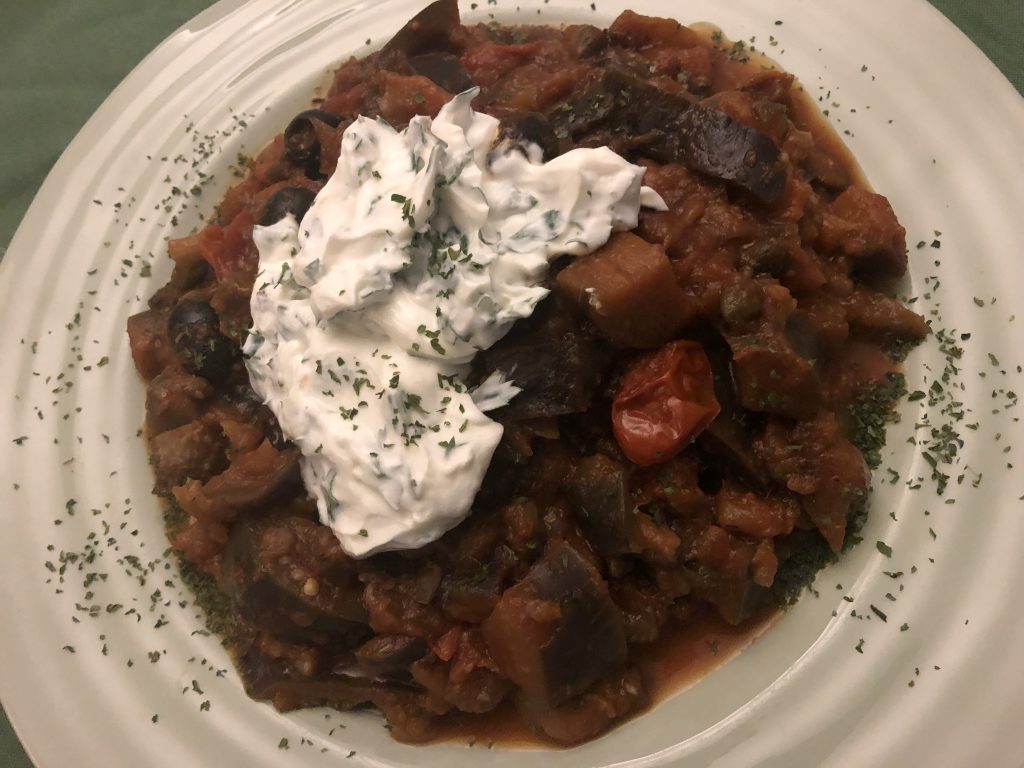
  • Aubergine Stew with Olives and Capers

    Aubergine Stew with Olives and Capers

    Aubergines must be my favourite summer vegetable. Many times when i try to think of different dishes to cook with aubergines i get lost from the various combinations you might have.

    In this case i got the ideam from the famous imam baildi and i tried to spice it up a bit with some more ingredients. Eggplants, or aubergines or whatever you want to name them are in the heart of Mediterenean cuisine and you can get a variety of similar dishes if you are at some point in Greece.

    As my father used to say it is important to manage and boil it properly and keeping the full texture of the vegetable. In the same time though the aubergine needs to melt in your mouth rather than having to chew it.

    Difficult? Well, that’s life!

    INGREDIENTS FOR AUBERGINE STEW WITH OLIVES AND CAPERS

    • 6 large aubergines
    • 2 medium onions sliced
    • 2 cloves of garlic
    • Around 20-30 olives without the stone
    • 20 cherry tomatoes cut in the middle
    • 1 glass of red wine
    • 1 tomato can juice
    • Oregano and Parsley
    • 300gr of Greek Yoghurt
    • Olive oil
    • Salt and Pepper

    METHOD

    • In cutting board start putting your aubergines and cut them in cubes with sharp knife.
    • In a deep pot add some olive onion and the onion and the garlic until it becomes brownish. Make sure you stir them all the time so they don’t get burned.
    • Add the olives, and the capers together with the tomato juice. Continue to stir them for couple of minutes.
    • Next, add the aubergines and leave them for couple of minutes. Pour the wine and let it for a minute more. Throw in the tomatoes , salt and peeper and lower the hit.
    • Keep boiling it for 25-30 minutes until they aubergines are done with out loosing there texture as we said before.
    • Just a bit before the end, add the oregano.
    • Serve in a deep plate by adding a big spoon of Greek style Yogurt on top
    Aubergine Stew with Capers

  • The Greek Burger

    The Greek Burger

    Making a burger is a great dish to make and have together with friends in the weekend, and especially during summer. So the following recipe is my interpretation of a burger with a Greek flavour. Behold the recipe for the Greek Burger.

    (more…)

  • Greek Food Dictionary

    Greek Food Dictionary

    Any time you go to Greece you will need to read or understand what there is on the menu. Now below, i have created a simple dictionary of ingredients from the Greek food where you can find all the different dishes and ingredients you might end up finding in Greece.

    Hopefully that will help you understand better what you eating or know what you need in case you need to cook something Greek.  The column on the left describes everything in Greek language, the middle is  Greeklish – an effort to pronounce everything with latin letters and the third English explanation.

    Enjoy!

    Τρόφη Trofi Food
    Αλάτη Alati Salt
    Αλεύρι Alevri Flour
    Αμυγδαλοτά Amigdalota Cookie often made on the islands and served at weddings and baptisms
    Αρνί Arni Lamb.
    Αστακός Αstakos Lobster.
    Αυγό Avgo Eggs
    Αυγολέμονο Avgolemono A warm sauce made with eggs and lemon. Served with meat, in soups, with vegetables.
    Αρακάς Arakas Peas
    Μπακαλιάρος Bakaliaros Cod, most often consuming the salted preserved cod, which was desalted and cooked with tomato sauce or fried.
    Μπακλαβάς Baklavas Pastries made with phyllo, honey and walnuts
    Μπάμιες Bamies Okra. Usually cooked with tomato sauce in a stew or roasted in the oven with tomatoes.
    Μπιφτέκι Bifteki Beef patty. The hamburger!  Usually a mixture of ground beef along with herbs, breadcrumbs and egg.
    Μπισκότο Biscoto Cookie
    Μπριάμ Briam A mixture of vegetables including potato, zucchini, eggplant and onion stewed or roasted in olive oil
    Δίπλες Diples Pastry made with dough, fried in olive oil and dipped in honey
    Ντολμάδες Dolmades Rice or meat wrapped in vine leaves, often served with avgolemono
    Ντομάτα Ntomata Tomato
    Ντοματοκεφτέδες Ntomatokeftedes Tomato patties. Patties made with tomatoes,   flour and herbs fried
    Ελιά Elia Olive
    Ελαιόλαδο Elaiolado Olive Oil
    Εξοχικό Eksohiko Meat cooked with peppers, tomatoes, onions and cheese in wax paper.
    Φάβα Fava A puree made with fava beans which are yellow spit peas.
    Φακές Fakes Lentils, traditionally cooked in a thick soup with olive oil and served with vinegar.
    Φασολάκια Fasolakia Green beans. They are usually cooked with tomato sauce and olive oil.
    Φασόλια Fasolia A general term for beans
    Φέτα Feta Semi-soft cheese made from sheep and goat milk
    Φραπέ Frappe A popular iced coffee made from instant coffee
    Φρούτα Frouta Fruit
    Γάλα Gala Milk
    Γαλακτομπούρεκο Galaktobouriko A sweet made with phyllo and a custard filling
    Γαρίδες Garides Shrimp
    Γαύρος Gavros Anchovies. They are either marinated in vinegar and salt or fried.
    Γραβιέρα Graviera A hard yellow and salty cheese made from sheep’s milk
    Χωριάτικι Σαλάτα Horiatiki (salata) The village salad, classic salad you could eat in Greece. Made with tomatoes, cucumbers, green pepper, onion, feta and olive oil.
    Χοιρινό Hirino Pork
    Χυλοπίτες Hilopites A egg pasta usually cut in small squares.
    Χόρτα Horta Greens. Boiled and consumed with olive oil and lemon.
    Χορτόπιτα Hortopita Savory pie made with thick phyllo dough and greens.
    Χταπόδι Htapodi Octopus. Served grilled or marinated.
    Καφές Kafes Coffee
    Καλαμαράκια Kalamarakia Calamari or squid. Often served fried as an appetizer.
    Καριδόπιτα Karidopita Walnut cake. A cake made with walnuts and syrup
    Κεφαλοτύρι Kefaloturi Hard yellow cheese made from sheep’s or goat’s milk
    Κεφτέδες Keftedes Small fried meatballs usually made from ground beef and ground pork.
    Κοκορέτσι Kokoretsi Organ meats and sweetbread pieces are passed through a skewer and wrapped with the intestines (usually of lamb) then grilled in a spit or grill until crunchy. Traditionally prepared for Easter.
    Κολοκυθάκια Kolokithakia Zucchini
    Κολοκυθόπιτα Kolokithopita Zucchini savory pie
    Κολοκυθοκεφτέδες Kolokithokeftedes Zucchini Patties
    Κοκκινιστό Kokinisto Food made with tomato, from the word kokkino which means red.
    Κοτόπουλο Kotopoulo Chicken
    Κουλουράκια Koulourakia Cookies, usually the shape of a ring or braided.
    Κουνουπίδι Kounoupidi Cauliflower. Usually consumed cooked in tomato
    Κουραμπιέδες Kourabiedes Christmas butter cookies covered with powdered sugar.
    Κρασί Krasi Wine (A variety of famous wines exist in Greece)
    Λάδι Ladi May refer to any oil, but usually means olive oil
    Λαχανικά Lahanika Vegetable
    Λάχανο Lahano Cabbage
    Λαχανοντολμάδες Lahanodolmades Dolmades made with cabbage
    Λαδερό Lathero Stewed dishes (sometimes roasted), usually vegetable based made with olive oil and tomato
    Μαγειρίτσα Mageiritsa A soup made from lamb offal and avgolemono (egg-lemon sauce), served traditionally on the eve of Easter.
    Μακρόνια Makaronia Spaghetti
    Μελιτζάνες Melitzanes Eggplant
    Μελιτζανοσαλάτα Melitzanosalata Eggplant dip
    Μελομακάρονα Melomakarona Honey cookies. Cookies traditionally made for Christmas with honey, olive oil and walnuts.
    Μεζές Mezes Small servings or tidbits of food to be served with a drink.
    Μουστοκούλουρα Moustokouloura Cookies made from the must of wine.
    Μουσακάς Mousakas Casserole made with potato, eggplant and ground beef.
    Μοσχάρι Moshari Veal
    Νερό Nero Water
    Νιστίσιμο Nistisimo Foods that adhere to the Greek Orthodox Fast (nistia)
    Ομελέτα Omeleta Omelet
    Ορεκτικό Orektiko Appetizer
    Ούζο Ouzo Alcoholic drink of anise distillation
    Παγωτό Pagoto Ice Cream
    Παπουτσάκια Papoutsakia A dish of baked eggplants stuffed with ground beef, cheese and tomato.
    Παξιμάδι Paximadi A rusk, usually referring to Cretan barley rusk.
    Παστέλι Pasteli A sweet made from sesame seeds and honey.
    Παστίτσιο Pastitsio A casserole made with pasta, ground beef, béchamel and tomato.
    Πίτα Pita Refers to the savory pies made with phyllo dough but also to pita bread
    Πιπεριά Piperia Peppers
    Ψάρια Psaria fish
    Ραβανί Ravani A cake made with semolina and syrup.
    Ρεβύθια Revithia Chickpeas
    Ρίγανι Rigani Oregano
    Ρύζι Rizi Rice
    Σαγανάκι Saganaki Fried cheese
    Σαλάτα Salata Salad
    Σάλτσα Saltsa Sauce
    Σαρδέλα Sardela Sardines. Usually served grilled or cured
    Σύκο Siko Fig
    Σκορδαλιά Skordalia A garlic dip made with garlic, bread or potato and olive oil
    Σούπα Soupa Soup
    Σουτζουκάκια Soutzoukakia Meat balls that are covered in spicy tomato sauce
    Σουβλάκι Souvlaki Skewers with pork meat (sometimes with chicken)
    Σπανακόπιτα Spanakopita Spinach pie made with phyllo and spinach and with or without feta cheese.
    Σπανακόρυζο Spanakorizo Dish made with spinach an rice cooked with a bit of tomato.
    Στοιφάδο Stifado Refers to a stew made with baby onions, tomatoes and spices, usually with veal but also made with rabbit or chicken.
    Ταραμοσαλάτα Taramosalata Dip made from a mixture of fish roe, bread and olive oil.
    Τηγανιτί Tiiganito Fried
    Τυρί Tiri Cheese
    Τυρόπιτα Tiropita Cheese savory pie usually made with feta cheese.
    Τραχανάς Trahanas Pellet shaped pasta made with milk
    Τσουρέκι Tsoureki A sweet bread made with eggs and various spices. Similar to a brioche. Traditionally made for Easter.
    Τζατζίκι Tzatziki Dip made from yogurt, garlic, olive oil and dill.
    Βασιλόπιτα Vasilopita Cake made for New Years Day to celebrate Saint Basil. A coin is hidden in the cake, the person who gets the coin is believed to have good luck for the year.
    Βύσινο Vissino Sour cherry
    Βυσσινάδα Vissinada Sour cherry drink, served often in the summer.
    Βοδινό Vodino Beef (cow)
    Βραστό Vrasto Boiled
    Γεμιστά Yemista Stuffed tomatoes, peppers and/or zucchini with just rice or herbs or with ground meat.
    Γιαούρτι Yiaourti Yogurt
    Γιουβαρλάκια Yiovarelakia Beef and rice balls cooked in avgolemono sauce
    Γιουβέτσι Yiouvetsi Casserole, usually a type of meat cooked with pasta
    Γλυκό Ylyko Sweet/dessert
    Γλυκό του κουταλιού Ylyko Koutaliou Spoon sweets. Preserves of whole fruits that are served to guests on small spoon and plate.
    Ζάχαρι Zahari Sugar
    Ζύμι Zimi Dough
    Ζωμός Zomos Broth
  • Discovering Cretan Cuisine

    Discovering Cretan Cuisine

    It is nearly impossible to visit any social media site without seeing posts about food.  A somewhat staggering 122 million Instagram posts are tagged with “#foodporn”; another 57 million are tagged “#foodie.”  Social media is also filled with details on new “miracle’ diets that promise to help you lose weight, extend your lifespan, and cure a wide range of diseases.

    For millennia one place on earth has quietly, and deliciously, prepared foods that are a foodie’s dream as well as one that is proven to have amazing health benefits.  That is the cuisine of Crete.

    Crete is the largest of the Greek Isles and one of the largest islands in the Mediterranean.  Crete is the home of the Zeus, and the Minoan Civilization. The island features rolling hills, beautiful mountains, and of course, tons of beaches.  Heraklion, the capital city, is a mixture of ancient and modern and one of the most popular tourist destinations in the Mediterranean.  Ancient palaces and settlements are found throughout the island, making it one of the most unique places in the world. 

    Cretan Food Basics

    It has been said that Cretan cuisine is built upon the “three Fs: freshness, fragrance, and family.”

    Cretans have been advocates of “locally-sourced” foods long before it became a buzzword of the foodies.  The diet is high in local fruits and vegetables and red meat consumption is fairly low. Bread is a staple, olive oil is the main fat, fish and poultry is used in moderation, and a glass (or two) or red wine usually accompanies a meal.

    The health benefits of Cretan cuisine are undeniable. Researchers have long advocated diets modelled after the Cretan diet as a way to fight and prevent diabetes.  Cretans have one of the world’s longest longevity rates.  Cretan men have one of the lowest percentage rates of death from certain forms of cancer and heart disease.

    olives

    Olive Oil

    One of the key aspects of Cretan cuisine is the use of olive oil as the only fat.  The traditional Cretan diet contains almost three times the fat content as that of consumed in the typical American diet.  A great deal of the olive oil consumed is neither fried nor boiled.

    Olive oil is rich in monounsaturated fatty acids. It is rich in antioxidants which provide a natural defence against certain types of cancers.

    olive oil greek salad

    Bread

    Bread, and a lot of it, is another part of the traditional Cretan meal. Once again Cretans consume about three times as much bread as the average American.  With the exception of special breads prepared for holidays and feast days, the bread is usually wholemeal bread.

    Rusk is a type of bread served in Crete. Rusk is made from wheat, rye, or barley flour, which is twice baked. The hard bread lasts for months and is served as an appetiser or snack with olive oil, or topped with fresh tomatoes, soft cheese, and herbs.

    Fruits

    Fruit trees are almost as abundant as olive trees on Crete and fresh fruit is available all year round.  Citrus fruits such as oranges, grapefruits, lemons and tangerines are the main winter fruits. In the summer you will find apples, plums, nectarines, and peaches to be plentiful.  During their seasons apricots, watermelons, figs, and pomegranates are abundant and are incorporated into a number of recipes or eaten as snacks and deserts.  Crete is home to a number of unique foods including the Mousmoula, an orange coloured fruit similar to a nectarine. The tasty fruit is available in early spring.

    Vegetables and Herbs

    Cretan cuisine is one of the most vegetarian friendly diets in the world; and the flavour and variety of fresh vegetables even tempt confirmed carnivores to consider a lifestyle change.

    Dried and fresh beans and greens are a staple of the traditional meals and all meals include freshly prepared or raw vegetables.

    Aubergines and artichokes, which grow wild on the island, along with tomatoes are used in many dishes and all are considered to be among the tastiest to be found anywhere.

    More than thirty greens are native to the island many can be found growing wild as well as being grown on local farms.

    Earlier we mentioned fragrance as one of the “three Fs” of Cretan cuisine.  This is due to the abundance of herbs, most of which are found in abundance growing wild, including oregano, thyme, basil, fennel, dill, sage, and marjoram, all adding delicious tastes and aromas to meals.

    greek dakos

    Dairy

    Dairy products are consumed in moderation but are still a key ingredient in the local cuisine.

    Grete cheeses are abundant and come in a large number of varieties. One of the best ways to sample the island’s cheese is to visit the local markets such as the Wednesday market in Heraklion.

    Among the types that must be tried are:

    • Anthotiros – This cheese is made from sheep and goat milk. The cheese is salty and earthy when it is hard and very mild when it is soft.
    • Kefalotiri – A firm sheep or goats cheese
    • Mizithra – This is the traditional Cretan fresh cheese which is made from sheep’s milk. It is called katsikithia when made from goat’s milk.
    • Graviera – Is a typical hard cheese that is typically made with sheep’s milk. The cheese is served hot fried or cold.
    • Greek yogurt (although the locals simply call it “yogurt”) is served frequently, often mixed with honey and fresh fruit or nuts.

    Meat

    Meat makes up only a small part of the typical diet, and red meat is served perhaps once a week.  Poultry and fish are the predominate meats served and are typically grilled.

    tsikoudia

    Drinks

    Red wine is a staple with most Cretans enjoying at least a glass with every meal. Children are often given small glasses as well.  Red wine has a long list of proven health benefits.

    The island is famous for some its native beverage; tsikoudia. This alcoholic beverage is also known as raki and is a grape based brandy with an alcohol content between 40% and 65%.  It make by distilling the pomace, the pieces of grapes including stems and seeds, left over after pressing the grapes for winemaking.

    Cretan Cooking

    While obviously the best way to enjoy Cretan cuisine is to visit the island, which is rich in history and beauty in addition to having some of the world’s best food.   However since the basic concept of Cretan cooking is fresh ingredients and simple preparation methods it is one of the easiest cuisines for the home chef.

    Some of the dishes well suited for trying Cretan cuisine in your home are:

    • Black-Eyed Peas with Fennel
    • Lamb with Greens, Artichokes and Avgolemono Sauce
    • Olive Oil Cake – Don’t let the name fool you, the cake is incredibly moist and tasty.
    • Fasolakia – Fresh beans cooked with crushed tomato and olive oil.