Category: Traditional

  • Fasolada: the greek traditional bean soup

    Fasolada: the greek traditional bean soup

    Its difficult to write about the following dish as anyone that has been to Greece or is Greek knows about it. The following bean soup is called “Fasolada” in Greek and it is one of the most famous dishes in country and one of the most healthy ones you can find.

    Trying to pronounce it can be a little bit difficult, but then again most of the recipes over here i guess would make you feel the same.

    Fasolada -and not mousaka– has been often characterized as the national food of Greece. There are many stories behind that. One of it is that before German occupation of 1941 but obviously afterwards, Greeks didn’t have much money to eat and meat was rare and only for privileged people. So many greeks had Beans as a basic part of there menu.

    Nevertheless, Fasolada has its roots also in ancient Greece where there are mentions about it.

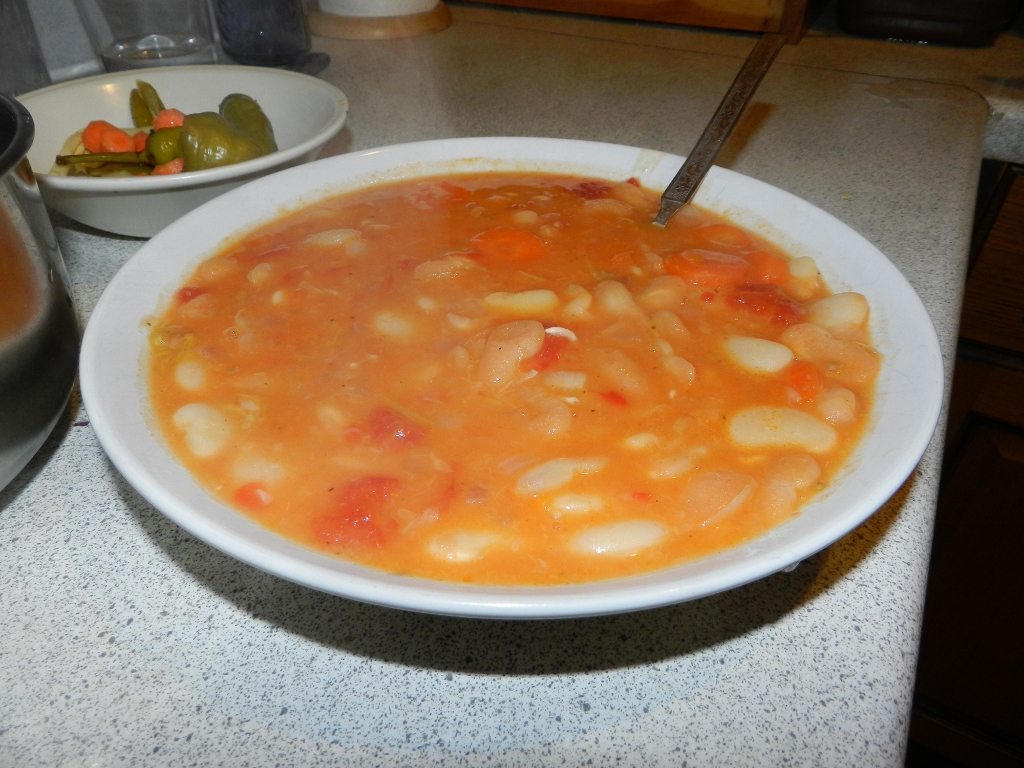
    Fasolada soup-bean soup
    Our Fasolada Soup

    In Athens, every year they celebrated god Apollo on the fourth month of the Athenian calendar which most probably would be around …end of September with end of October in our times.  In order to celebrate his presence they were cooking bean soup for him.

    Why especially bean soup?

    Well, when Thiseas according to ancient mythology, went to Crete to kill Minotauro he stopped in the sacred island of Dilos to make a sacrifice (Olive which was considered sacred…) to Apollo in order to help him and come back alive.  However, Thiseas coming back to Athens after killing Minotauro didn’t had anything on his boat to give to Apollo.

    Most probably they ate everything…

    So Thiseas ordered his crew to gather beans that was left and offer them to Apollo in the temple of Dilos. The result? Athenians and later on other Greeks were always cooking bean soup at that time!Whatever story you choose doesn’t makes a big difference. The main point is that it is one of the most traditional dishes of the country.

    The recipe is really simple but it takes a lot of preparation in order to succeed the proper taste.

    Greek Bean Soup
    Add some Feta cheese on top and your greek bean soup is ready

    How do you make the Greek Bean Soup (Fasolada) ? 

    • 500 gr of medium beans
    • 3 carrots sliced
    • 2 medium onions sliced
    • 2 celery sliced
    • 1 tomato juice can
    • 1/2 cup of Olive Oil
    • Salt/Pepper

    Method

    • Boil the beans in pot for 35-40 mins and then strain them. Slice all the vegetables . Add in the pot the Olive Oil, as well as the vegetables and stir them really good as they start to sizzle.
    • Pour the tomato can and stir it good so it can mix with all the other vegetables. Then we add the half  cooked beans and we pour a bit of boiled water so it can cover all the ingredients.
    • Cover the pot and continue to boil for 30-40 mins.
    • Add salt and water as well as Olive oil to make the bean soup more juicy.  Serve it with Olives or pickles.

    Is Fasolada Healthy? 

    It is the dish of the Greek culture and tradition. A trademark of the Greek diet which is  extremely nutritious and topical due to its low cost choice.

    Like all legumes, it is a very good source of plant protein in our diet. It is not compared to the protein of meat and animal food, but when combined with foods such as rice it is very close to it. It contains significant amounts of insoluble and soluble fiber that contributes to lowering blood cholesterol levels and good functioning of the gastrointestinal tract.

    It is also an excellent source of vitamin B1, which is also called thiamine, and plays a role in our better mental function.

    Adding vegetables and spices, such as celery, carrot, significantly increases the vitamin content of an antioxidant such as carrot. According to the principles of the Mediterranean diet, legumes such as beans and lentils should be consumed at least once or twice a week. And for those who cook them we advise not to overdo it in the oil and add it to the end of the cooking or even raw after boiling.

    A cup (172 g) of cooked beans contain:

    • Calories:227
    • Carbohydrates:40.8 g
    • Totalfat: 0.9g
    • Vegetablefiber: 15g Is excellent source:
    • Iron(3.61mg),
    • Magnesium(120mg),
    • phosphorus(241mg)
    • Flavic acid (256mcg)

    and good source:

    • Zinc (1.93mg),
    • thiamine(0.42 mg),
    • niacin (2mg).

    Still anot so well-known feature is their high antioxidant content.

    data from: neadiatrofis.gr 

  • Traditional Greek Orzo pasta with tomato

    Traditional Greek Orzo pasta with tomato

    One Sunday, I wanted to cook something quite easy as I woke up really late. I had some orzo and my focus was to make a gioubetsi again at some point.

    Nevertheless, I just wanted to use some of it today and see what other recipes exist for orzo. So after checking a little bit on the net, I remembered one classic recipe that my mother used to do when we were younger.

    Orzo with red sauce is something really easy to cook and really delicate in taste. As I saw in a Greek site it is the Greek version of risotto…

    Honestly when I cooked, I realized how many easy to cook recipes exist out there which you can cook after work, when you are a student, when you are bored in general…but never do.

    ORZO PASTA WITH TOMATO

    Ingredients

    • 1 cup of Orzo
    • 1/2 Cup of Basil leaves
    • 1 small pack of cherry tomatoes
    • 2 table spoons of Olive Oil

    Method

    1. Bring a large pot of lightly salted water to a boil. Add orzo and cook for 8 to 10 minutes. Drain and set aside.
    2. Place basil leaves and the cherry tomatoes in a food processor. Pulse 4 or 5 times until blended.
    3. In a large bowl, toss together the orzo, basil-tomato mixture, olive oil, Parmesan cheese, salt and pepper. Serve warm or chilled.

    Enjoy!

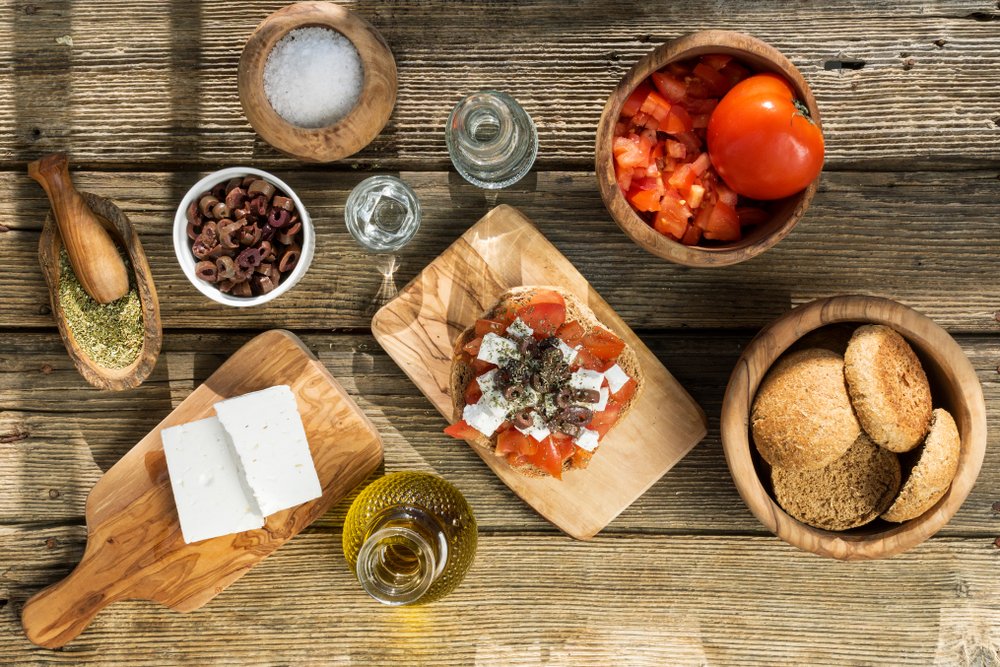
  • Dakos : The famous Cretan starter

    Dakos : The famous Cretan starter

    I was wondering once how many times I had started my articles in this blog with the phrase “…I was bored, so I decided to cook something…”. To be honest I didn’t looked on all of my articles but it must have been too many times.

    (more…)
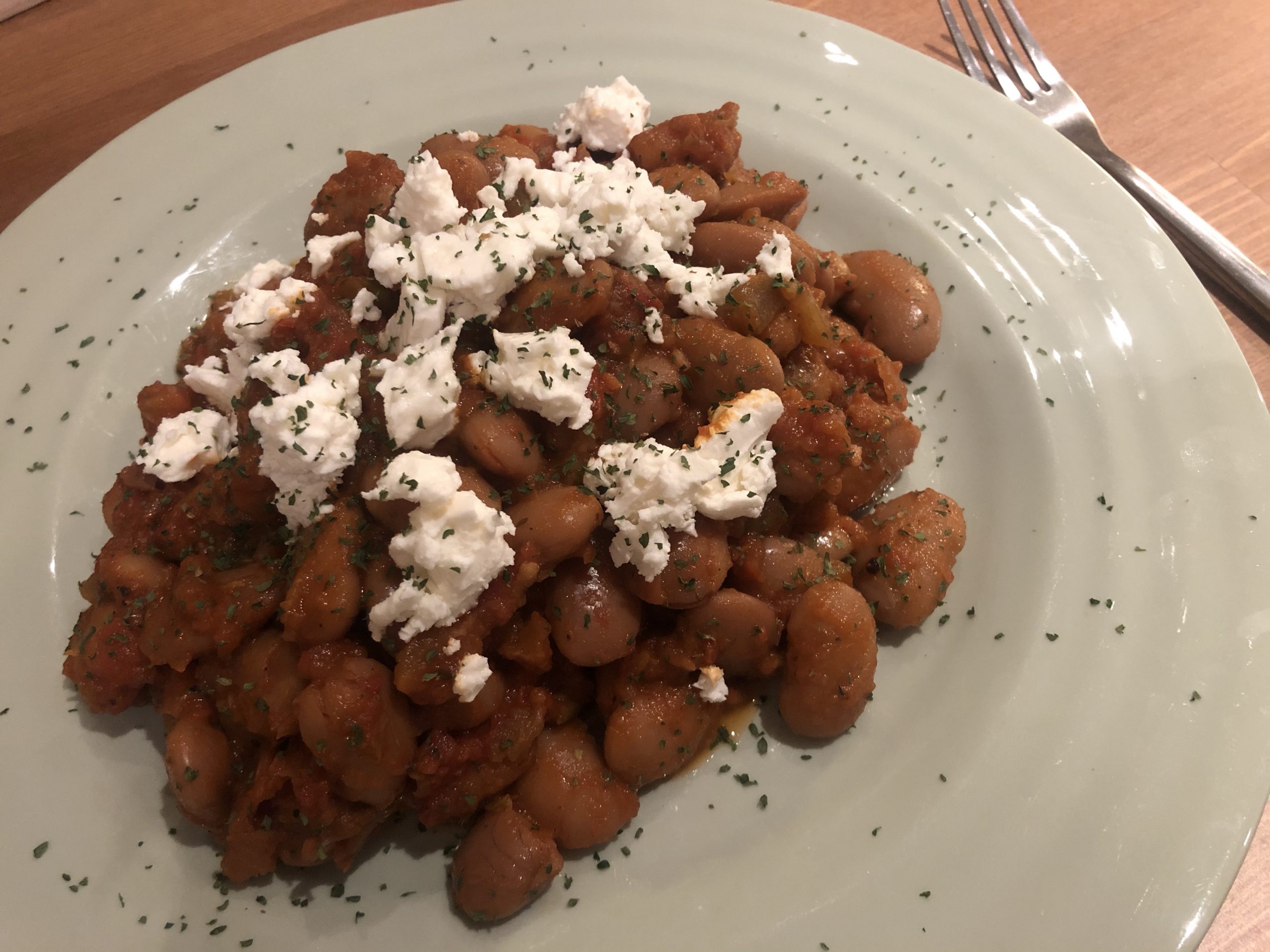
  • Gigantes Plaki – Giant beans recipe

    Gigantes Plaki – Giant beans recipe

    There are some classic recipes that if you go to various restaurants in Greece you are bound to see them in the Menu’s. “Gigantes Plaki” are one of them..

    (more…)
  • Red Easter Eggs with Onions

    Red Easter Eggs with Onions

    During Easter it is tradition to colour red eggs and eat them after church in Saturday. According to Christian religion is one way to symbolize rebirth. Whatever it may be… Easter eggs are one of my favourite foods during Easter and one that I really enjoy to eat. So much that …sometimes I overdo it with the amount of eggs that I eat.

    In Greece but also many Christian countries, they eat the red eggs after they return from church together with the magiritsa, a traditional easter soup, cooked at that day.

    This year I tried to see how much difficult it would be to paint the eggs using a natural way rather than the new chemical paints that they use. I have to say that I found it rather easy to make the eggs and without a lot of trouble. It was my first time…and quite successful I would say..

    So this one is one easy recipe to paint red Easter eggs using onions. 100% natural…

    Easter red eggs ingredients

    • 12-16 medium eggs
    • 15-20 skins from yellow onions (red would also)
    • Olive oil
    • Some paper

    Method

    1. Start with around 12 medium eggs.
    2. Carefully remove any material from the surface of the eggs.
    3. Make the dye with the onion skins: In a stainless saucepan, place skins of 15 (more or less) yellow onions and 2 tablespoons of white vinegar in 5-6 cups of water and bring to a boil. Lower heat and simmer, for 30 minutes keeping the saucepan covered
    4. Strain dye into a glass bowl, and let cool to room temperature. (Don’t be fooled by the orange color.)
    5. In another stainless saucepan, add the cooled strained dye and eggs at room temperature. The eggs should be in one layer and covered by the dye. Dont put more than 12 every time as it will be really crowded.
    6. Bring to a boil over medium heat. When boiling, reduce heat to low, cover, and simmer.
    7. Dyeing time will be affected by the color of the eggs. Start checking for color at 15 minutes and do not simmer longer than 20 minutes
    8. If eggs are not a red enough color after 20 minutes, leave in the pot and remove from heat. When the pot as cooled enough, place in refrigerator and let sit until desired color is reached.
    9. Remove eggs with a slotted spoon and let them cool on racks.
    10. When they can be handled, coat lightly with olive oil and polish with paper toweling.
    11. Refrigerate until time to use. Happy Easter!
    https://www.instagram.com/p/B_E71I0hNkR/