As I started to explore Greek Cuisine more intense in the last few years, I always had in mind to look for traditional recipes that existed in every part of Greece. Also my focus was to try and find the customs that we had for each celebration. That’s how I ended up learning about Pork for christmas…
Category: Blog
-

Discovering Cretan Cuisine
It is nearly impossible to visit any social media site without seeing posts about food. A somewhat staggering 122 million Instagram posts are tagged with “#foodporn”; another 57 million are tagged “#foodie.” Social media is also filled with details on new “miracle’ diets that promise to help you lose weight, extend your lifespan, and cure a wide range of diseases.
For millennia one place on earth has quietly, and deliciously, prepared foods that are a foodie’s dream as well as one that is proven to have amazing health benefits. That is the cuisine of Crete.
Crete is the largest of the Greek Isles and one of the largest islands in the Mediterranean. Crete is the home of the Zeus, and the Minoan Civilization. The island features rolling hills, beautiful mountains, and of course, tons of beaches. Heraklion, the capital city, is a mixture of ancient and modern and one of the most popular tourist destinations in the Mediterranean. Ancient palaces and settlements are found throughout the island, making it one of the most unique places in the world.
Cretan Food Basics
It has been said that Cretan cuisine is built upon the “three Fs: freshness, fragrance, and family.”
Cretans have been advocates of “locally-sourced” foods long before it became a buzzword of the foodies. The diet is high in local fruits and vegetables and red meat consumption is fairly low. Bread is a staple, olive oil is the main fat, fish and poultry is used in moderation, and a glass (or two) or red wine usually accompanies a meal.
The health benefits of Cretan cuisine are undeniable. Researchers have long advocated diets modelled after the Cretan diet as a way to fight and prevent diabetes. Cretans have one of the world’s longest longevity rates. Cretan men have one of the lowest percentage rates of death from certain forms of cancer and heart disease.

Olive Oil
One of the key aspects of Cretan cuisine is the use of olive oil as the only fat. The traditional Cretan diet contains almost three times the fat content as that of consumed in the typical American diet. A great deal of the olive oil consumed is neither fried nor boiled.
Olive oil is rich in monounsaturated fatty acids. It is rich in antioxidants which provide a natural defence against certain types of cancers.

Bread
Bread, and a lot of it, is another part of the traditional Cretan meal. Once again Cretans consume about three times as much bread as the average American. With the exception of special breads prepared for holidays and feast days, the bread is usually wholemeal bread.
Rusk is a type of bread served in Crete. Rusk is made from wheat, rye, or barley flour, which is twice baked. The hard bread lasts for months and is served as an appetiser or snack with olive oil, or topped with fresh tomatoes, soft cheese, and herbs.
Fruits
Fruit trees are almost as abundant as olive trees on Crete and fresh fruit is available all year round. Citrus fruits such as oranges, grapefruits, lemons and tangerines are the main winter fruits. In the summer you will find apples, plums, nectarines, and peaches to be plentiful. During their seasons apricots, watermelons, figs, and pomegranates are abundant and are incorporated into a number of recipes or eaten as snacks and deserts. Crete is home to a number of unique foods including the Mousmoula, an orange coloured fruit similar to a nectarine. The tasty fruit is available in early spring.
Vegetables and Herbs
Cretan cuisine is one of the most vegetarian friendly diets in the world; and the flavour and variety of fresh vegetables even tempt confirmed carnivores to consider a lifestyle change.
Dried and fresh beans and greens are a staple of the traditional meals and all meals include freshly prepared or raw vegetables.
Aubergines and artichokes, which grow wild on the island, along with tomatoes are used in many dishes and all are considered to be among the tastiest to be found anywhere.
More than thirty greens are native to the island many can be found growing wild as well as being grown on local farms.
Earlier we mentioned fragrance as one of the “three Fs” of Cretan cuisine. This is due to the abundance of herbs, most of which are found in abundance growing wild, including oregano, thyme, basil, fennel, dill, sage, and marjoram, all adding delicious tastes and aromas to meals.

Dairy
Dairy products are consumed in moderation but are still a key ingredient in the local cuisine.
Grete cheeses are abundant and come in a large number of varieties. One of the best ways to sample the island’s cheese is to visit the local markets such as the Wednesday market in Heraklion.
Among the types that must be tried are:
- Anthotiros – This cheese is made from sheep and goat milk. The cheese is salty and earthy when it is hard and very mild when it is soft.
- Kefalotiri – A firm sheep or goats cheese
- Mizithra – This is the traditional Cretan fresh cheese which is made from sheep’s milk. It is called katsikithia when made from goat’s milk.
- Graviera – Is a typical hard cheese that is typically made with sheep’s milk. The cheese is served hot fried or cold.
- Greek yogurt (although the locals simply call it “yogurt”) is served frequently, often mixed with honey and fresh fruit or nuts.
Meat
Meat makes up only a small part of the typical diet, and red meat is served perhaps once a week. Poultry and fish are the predominate meats served and are typically grilled.

Drinks
Red wine is a staple with most Cretans enjoying at least a glass with every meal. Children are often given small glasses as well. Red wine has a long list of proven health benefits.
The island is famous for some its native beverage; tsikoudia. This alcoholic beverage is also known as raki and is a grape based brandy with an alcohol content between 40% and 65%. It make by distilling the pomace, the pieces of grapes including stems and seeds, left over after pressing the grapes for winemaking.
Cretan Cooking
While obviously the best way to enjoy Cretan cuisine is to visit the island, which is rich in history and beauty in addition to having some of the world’s best food. However since the basic concept of Cretan cooking is fresh ingredients and simple preparation methods it is one of the easiest cuisines for the home chef.
Some of the dishes well suited for trying Cretan cuisine in your home are:
- Black-Eyed Peas with Fennel
- Lamb with Greens, Artichokes and Avgolemono Sauce
- Olive Oil Cake – Don’t let the name fool you, the cake is incredibly moist and tasty.
- Fasolakia – Fresh beans cooked with crushed tomato and olive oil.
-

Mastic: An Amazing Ancient Greek Product That You May Not Know Of
The Greek Islands have arguably made more long lasting contributions to society and civilisation than any other culture. The islands are best known for contributions in art, culture, government, and sports. Often overlooked are the island’s millennia old contributions in the areas of food and health.
Thanks in large part to social media; the “Mediterranean Diet” has become one of the latest “fad” diets, despite the fact that the health benefits of the typical Greek diet have been documented for thousands of years. The Greek islands are also home to some of the world’s most versatile foods and plant products; one of those is mastic (mastiha), which is grown on the island of Chios. Historical records show that Chios has been inhabited since the Neolithic ages. The island, the fifth largest of the Greek islands, is mountainous and dotted with caves, which served as dwellings for the first inhabitants. Chios island played important roles in basically every period in history. It’s contributions to civilisation include being one of the first to mint coins and spearheading the Greek exporting and shipping industries.
One of the island’s most valuable exports is mastic.
What is Mastic?
Mastic is a resin from the mastic tree, which is also known as “Arabic gum” or locally as “tears of Chios.” Mastic is collected during the late summer/autumn, in a time consuming process. The ground around the tree is cleared and sprinkled with calcium carbonate. Five to ten incisions are made in the bark ever few days. The resin drips from the cuts and solidifies on the ground. The dried resins is collected and cleaned for sale or to produce mastic oil.

The Mastic Tree, the mastic is dripping slowly from the tree The EU has granted Chios protected designation of origin status (PDO) for mastic production. In part due to the expense in production and the PDO, a number of countries have attempted to produce substitutes of mastic. Mastic has played such an important role in the islands’ history that a small Mastic Museum can be found in Pyrgi and a newer, larger museum is in Emporios.
One of the reasons mastic has been such a large contribution to Chios’ economic and shipping success for thousands of years is its wide range of uses.
Mastic Uses
When first collected, mastic is sun-dried into brittle, translucent pieces. The pieces are frequently chewed which softens the resin and turns into to a bright white, opaque gum. The flavour starts out bitter and then becomes more refreshing with a taste like pine or cedar.The range of uses includes medicines, spices, and drinks.
Medicinal
Mastic is still a traditional folk medicine a tradition that dates back to antiquity. In ancient times it was used as a snakebite remedy, a preventive for colds and digestive problems, a bronchitis treatment, and blood conditions.
Mastic is rich in antioxidants, and has antifungal and antibacterial properties. Recent UK studies suggest that mastic is an effective treatment for peptic ulcers. Mastic powder has been proven to lower serum cholesterol levels. Mastic oil is an effective treatment for skin disorders.Mastic in Food
The range of food uses for mastic is impressive. It is especially common in Arabian cuisine and is enjoying increasing popularity in Japanese cooking. Mastic is most commonly used in baking and deserts.
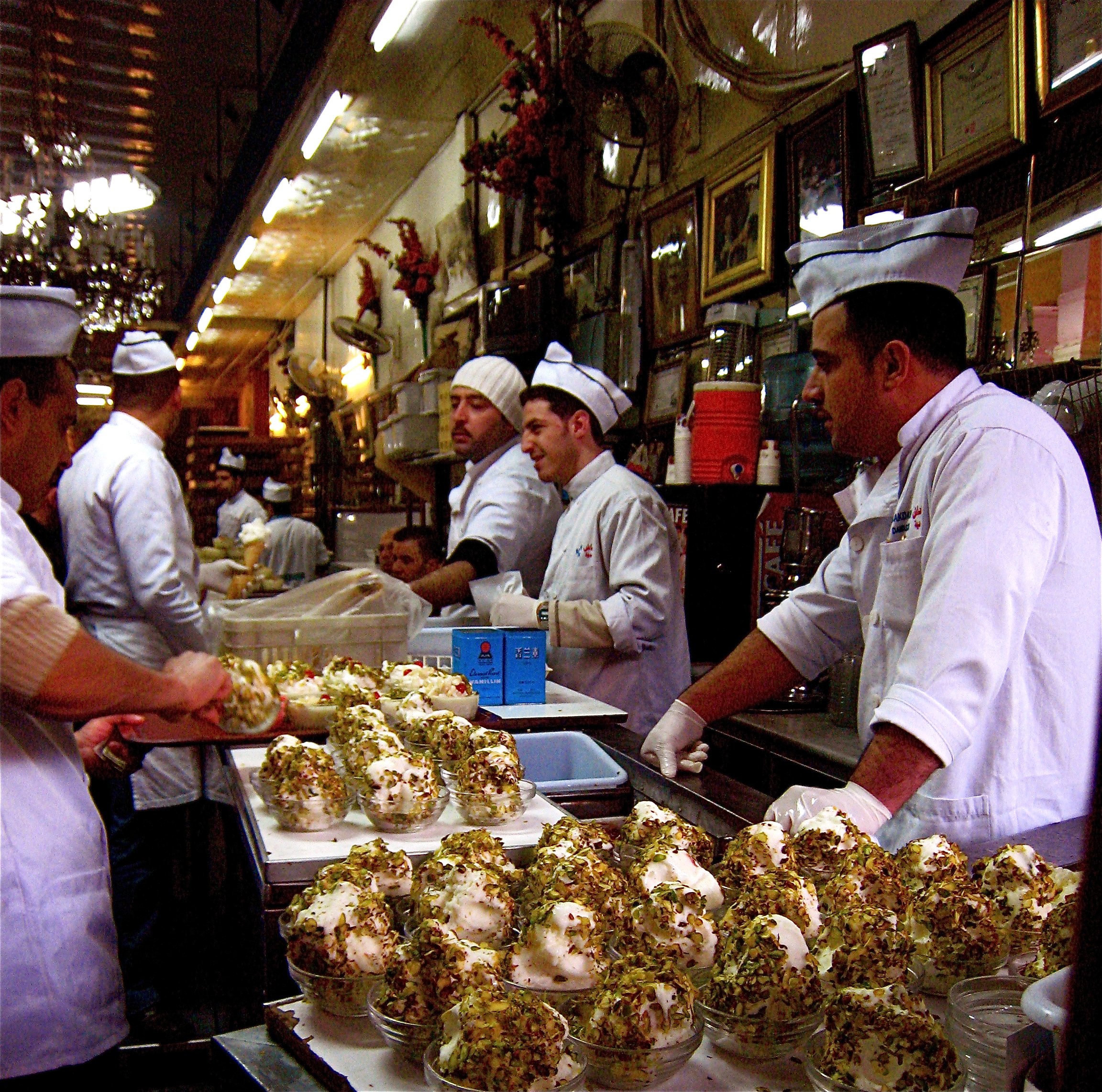
Mastic is used throughout the region in a variety of ways.- Syria – used to prepare specific types of ice cream giving them a very particular texture and taste.
- Egypt – used in vegetable and fruit preserves, soups, and meats.
- Morocco – used as part of the preparation of smoked foods.
- Turkey – used in Turkish coffee in parts of the country as well as in Turkish delight, puddings, and soft drinks.
- Greece – used in mastic liqueurs, in beverages, sweets and desserts, cheese, ice cream, breads, and jams.
 Dental
“Mastic” is derived from the Greek word which means “to gnash the teeth.” Naturally this means that mastic has played a role in dental hygiene and health. Chewing mastic is an effective breath freshener and tooth whitener. It also helps prevent gingivitis and tooth decay. Ancient Persian and Indians filled dental cavities with mastic. Mastic flavoured chewing gum is still found in Greece, Turkey, Syria and Lebanon.
Other Uses
In ancient Egypt mastic was used as an embalming agent. In modern times a mastic varnish is used to protect photographic negatives, in body lotions and oils, perfume, and soaps, and to produce incense.
-

A walk in Varvakios Market in Greece
Last new years astve i decided to have a go at the main center of Athens in the morning in order to have a chance to get my last presents. Walking up and down in Athens i ended up walking inside the biggest food market in Athens. The Varvakios market.
Varvakeios Agora – the biggest market area in one locale in Greece – is one of the city’s landmarks and known all over as a ‘’must visit’’ for the best meats, fish, fruit, vegetables, herbs and spices. The market is referred to as the Municipal or Central Market of Athens or, as the locals would say, the Kentriki Agora, and of course the Varvakeios Agora as most people know it.
Historical Background
Designed by the architect Ioannis Koumelis the Varvakeios was built between 1876 and 1886 and replaced a previous unsightly arrangement of wooden sheds and flimsy structures, which had served as public market before. Even a huge fire in 1884 did not stop the project. Named after one of Greece’s national heroes, Ioannis Varvakis who lived between 1745 and 1825 and is remembered to this day for his part in helping Greece gain independence from their Ottoman rulers; the market draws visitors from all over. The complex underwent extensive renovations during the period 1979 – 1996 and today houses more than 70 shops under the covered area alone. Apart from the meat, fish and fresh produce counters to peruse, sit down at some coffee shops, restaurants, fast food outlets and little tavernas. Ask for patsas (made from pork stomach) to get rid of a hangover or too much rich food after a heavy night out!
Where to Find the Market
Situated on Athinas Street and adjacent roads such as Evripidou, Eolou and Asophocleous Streets in the heart of the city between Omonia and Monastiraki Squares, the market is easy to reach. It is within walking distance of the City Hall and the well-known Kotzia Square which many tourists find very convenient as quite a number of hotels are situated nearby.
Opening Hours
The market is open between 7am and 6pm every day, including Saturdays, but closed on Sundays. The only exception is Easter, Christmas, Clean Monday and other important holiday festivals when Greeks follow a special diet. During those festivals the market may stay open longer and also operate on Sundays.
Value for Money
The younger set may prefer to buy their food in modern supermarkets; however, those above 40 generally understand where to find the best value, which is in the halls and aisles of the Varvakeios Agora. Meat, fish, fruit and vegetables are fresh and you can handpick what you like. Prices are better than those you find in modern supermarkets. The real value is probably found in the fact that you have a huge variety, that you can compare prices and be sure of absolute freshness before you buy. If restaurant owners shop here, so should you!
Like all big cities, Athens and shopping are best experienced when you shop where the locals shop – yes, often you find the heart of the city and its culture where the locals go to buy their fresh fish, meats and produce. The Varvakeios Agora is an excellent example.

The Fish Market
Since fish forms an important part of the Mediterranean diet, it should come as no surprise that the Varvakeios Fish Market serves up to 5,000 customers every day; the fish market alone employs more than 400 staff members that handle as much as 10 tons per day. The choice is great – from bream, cod, mackerel, sardines, swordfish, sole and monkfish to anchovy and more. It seems the list is endless. In fact, you will find almost any fish the Aegean Sea has to offer.

Varvakios Meat Market
This section is found next to the fish market – it surrounds the fish market on 3 sides – and has an amazing choice of beef, pork, goat, lamb, chicken, livers, kidney and sometimes rabbit. Some fresh, and some cured – the latter perfect as gifts. People come over here before easter to get ingredients for the easter soup, magiritsa or before christmas to prepare the traditional dinner.
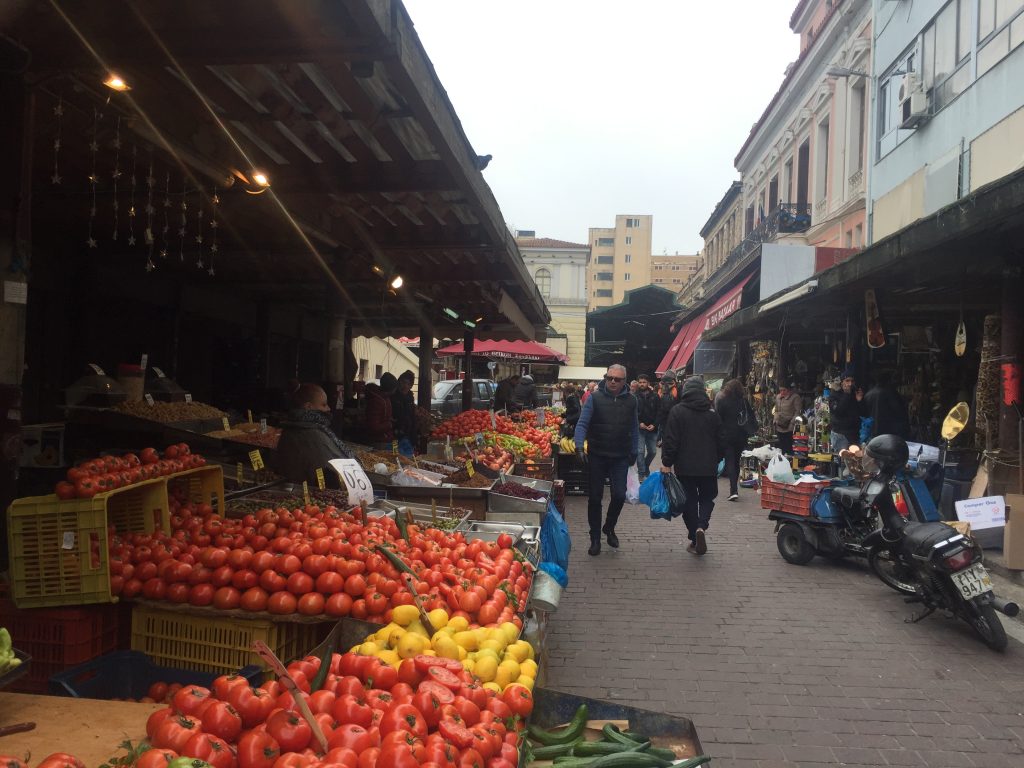
Vegetables and the Spices market
Fruit and Vegetables Opposite the meat and fish markets you will find the freshest produce imaginable: peaches, lemons, grapes, oranges and prunes, amongst choices. Look out for every vegetable your heart desires: a variety of pumpkins, cauliflower, broccoli, and potatoes. You name it, it’s there.
Olives and Spices Olives are very popular and easy to find in Greece. The Varvakeios Agora is no exception, and every variety imaginable is to be found in the market. Most storeowners will allow you to sample their olives before you buy. Spices and nuts are on display in the Evripidou Street area, as are raisins, dates, berries and a variety of dried fruits.
Some Valuable Tips
* To get the most out of your Varvakeios Agora experience, make sure you’re not in a hurry. Take your time and, apart from visiting the fresh food stores and counters, browse through various stores that sell canned and bottled products too.
* To avoid a typical buyer’s rush, try and visit the market between 10 am and 1 pm. That way you can be sure of having the best options AND fresh produce at hand since all stores will be open and the choices will be great.
* As for transport: rather than use a private car or taxi – which can get caught up in the city’s terrible congestion – consider the metro service and other modes of transportation such as one of the various bus lines. You don’t have to worry about parking, which is not only hard to find, but also very expensive.
* It is best to wear shoes and not flip-flops as the floors may be damp or wet.
* If you are prepared to wait until later in the day, prices are likely to drop as vendors want to be sure to sell all their products.
* Gifts – tourists have a wonderful choice of canned sardines, meats, spices, olives, cheeses and dried fruits to take home with them.
As one of the outstanding landmarks in Athens, the Varvakeios Agora has been bringing food to the public – locals as well as visitors – for almost 150 years. Its popularity as culinary destination can’t be questioned.
-

The Mediterranean Diet – Looking at Some Facts
The Mediterranean Diet is actually much more of a way of life than it is a diet, even though the name may suggest otherwise. The emphasis is not on weight loss, rather on keeping healthy.
Background
Although it was originally inspired by eating patterns in the 1940s and 1950s in southern Europe, it only rose to prominence in the 1990s. Much more so than previously, the last few decades have seen an increased interest in dietary and lifestyle issues, mainly because obesity and cardiovascular problems have become bigger issues. But the diet is more than a health check. It has been a way of life around the Mediterranean Sea, where meal times are often seen as an opportunity to strengthen existing family ties or even forge new friendships – in short: mealtime is the perfect time to socialise, whether it’s with family and friends, members of one’s community, or even with strangers.
In certain areas more bread and pasta are consumed than in other parts, such as Italy, and therefore the diet can be high in carbohydrates, which, if you want to lose weight, may not be so easy. Unless, of course, you lead a fairly active lifestyle which includes exercise.
What exactly is the Mediterranean Diet?
This is a diet found in the countries – as the name suggests – around the Mediterranean. Even UNESCO, in 2010, included the diet in its Intangible Cultural Heritage of Humanity list for the following countries: Croatia, Greece, Crete, Italy, Morocco, Spain and Portugal. People who have studied this diet and its benefits will tell you it is more about – in a way – who you are, than following strict rules and weighing calories. It is also interesting to note that the diet may vary from country to country – even from region to region in the same country – depending on the produce that is grown in a specific area, or in some cases because of ethnic differences or economic diversity.
The Main Ingredients
- Typical foods consumed by those following this diet include the following: fruit, a variety of vegetables, legumes such as beans and peas, nuts, unrefined cereals (mostly whole grains) some steamed fish and other seafood, limited chicken and wine. Some dairy (mainly cheese and yogurt) and eggs are consumed – and very little red meat and sweets.
- One aspect of the diet that stands out is the high consumption of olive oil – preferably extra virgin – that contains plenty monounsaturated fatty acids (as opposed to butter which contains saturated animal fats). You will find that oil is dribbled over almost every salad, which normally contains green leaves and tomatoes among the ingredients. Most often it is used as an alternative to butter and margarine. Olive oil is also used for cooking and baking a variety of dishes in certain regions, as opposed to butter and lard; the latter, for instance, is often used to cook with in Northern Italy. Avocado oil is another source of good plant oil.
- Lots of water is recommended. So is red wine in moderation – try not to have more than a glass per day though. Coffee is allowed, and so is tea. But stay away from sweeteners and fruit juices which are high in sugar, unless of course you squeeze and drink your orange juice fresh, with nothing added.
It is worth mentioning, too, which foods should best be avoided: any added sugar such as those found in soda drinks, ice cream and table sugar, refined grains, refined oils and processed foods.
Following the Mediterranean Diet
The easiest way to ‘train’ oneself in terms of the diet is to see it as a healthy daily routine and not to think of it as a diet as such. Besides, you certainly don’t have any reason to go hungry as you would on most other diets. Also, if you smoke, give up – and set aside enough time to exercise.
If you accept that vegetables, fruit, whole grains and fish make up the bulk of your daily food allowance, you certainly are ‘there’. Individuals will always have different appetites, so each one decides how much he or she eats.
Make sure you include the main groups every day – as listed below – and avoid those which are better to cut out.
- Popular vegetables include, typically, carrots, spinach, cauliflower, broccoli, tomatoes, onions and cucumber.
- Fruit most often included in the diet are oranges, apples, pears, grapes, peaches, melons, figs and strawberries.
- Nuts in the diet include hazelnuts, cashews, almonds, seeds such as pumpkin and sunflower.
- Whole grains that one should try and include are whole oats, barley, brown rice, rye, whole wheat and pasta. For those who are a bit more weight conscious, try and limit the bread and pasta.
Never punish yourself. Have a steak or something sweet from time to time, but regard it as a treat. Then enjoy it! Even at restaurants there is no reason to feel you can’t enjoy a meal. Stick to fish and salads. Ask the chef to fry your food in virgin olive oil and stay away from refined grains – eat whole grain bread. Instead of butter, dribble olive oil over it.
Health Benefits
Studies suggest that people who follow a diet rich in vegetables, nuts and oils are a third less likely to die early, as opposed to those who consume red meat and butter, for instance. This makes the Mediterranean Diet a better option than those typically favoured in the UK and US – in fact most western countries with their emphasis on foods high in animal fats and sugars. It is claimed that obesity and type 2 diabetes, high blood pressure, heart disease and even Alzheimer’s can be much better controlled by an eating pattern such as the Mediterranean Diet. There also seems to be good news for the over 50’s with reports that aging brainpower may be boosted by following the diet.
In the Spotlight
It has emerged that there seems to be a definite change in Mediterranean eating patterns in recent years, away from the previously healthy ones which made the headlines. It seems that mass tourism may partly be to blame. Visitors on holiday from the UK and the US, specifically, are known for their preference for fast food, red meat and refined flours. Also, the typical ‘Western’ diet allows for the consumption of fast foods much more than a traditional diet, such as the Mediterranean. It stands to reason that Europe’s touristy Mediterranean would change its eating habits to please the visitors who contribute billions to the economy of these parts every year.
This trend has also shown increased levels of obesity among even teenagers. The associated danger of diabetes and heart disease because the younger generation today eats less fruit and vegetables, but much more deep fried food and sweets, is worrying. Further, life is different: As times are changing people in these parts have become less physically active since their livelihood no longer necessarily depends on working the fields and going out to sea for a full day’s work.
Figures indicate that in Greece, where seven in ten adults are now considered overweight or obese, the diet has decreased by up to 70% in recent times, according to Luis Serra-Majem, head of the International Foundation of Mediterranean Diet and by almost 50% in Spain.
Now, it seems, ways must be found to reintroduce this diet that seems to have so many benefits, from physical health to aspects of socialising.